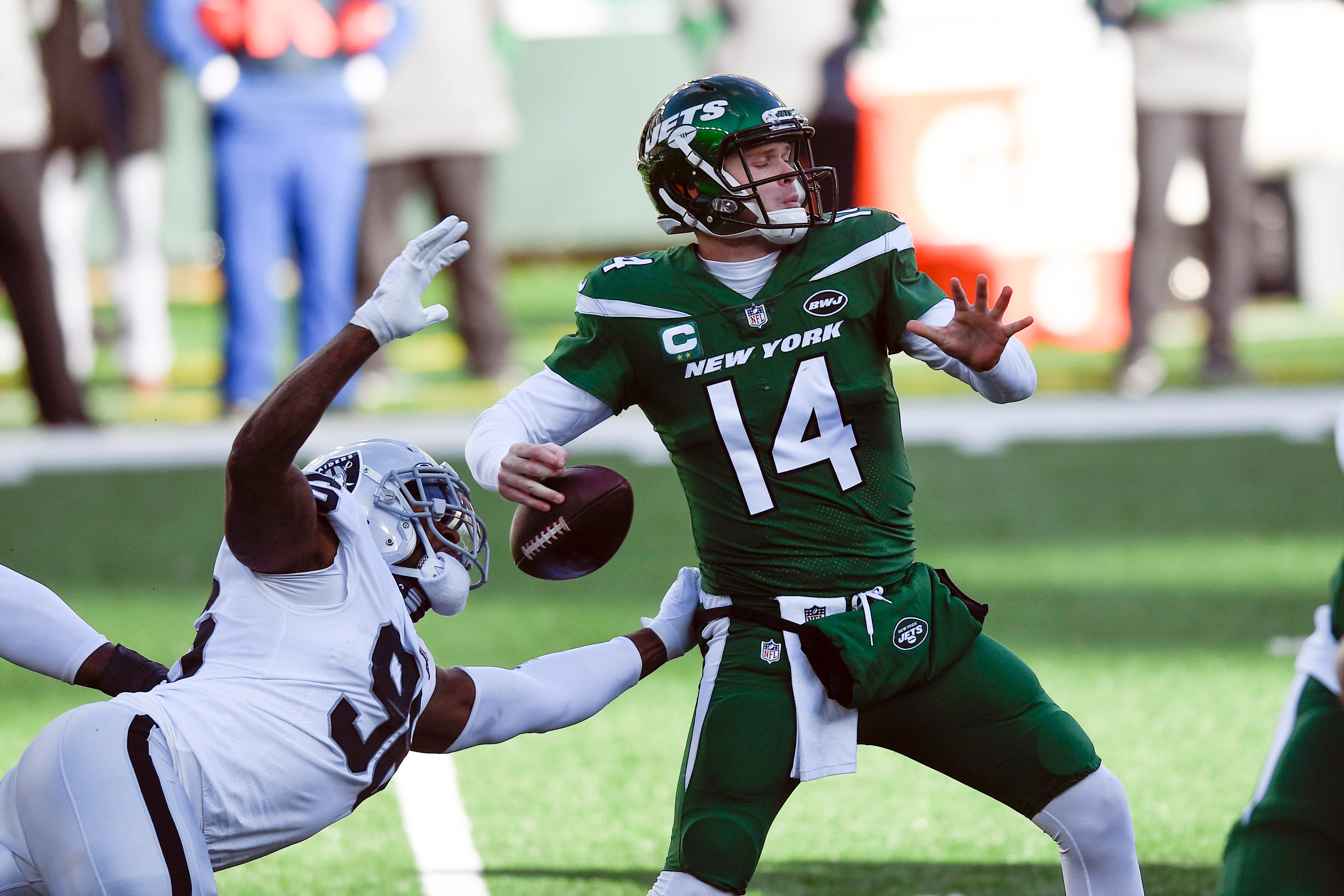
Three NFL Draft goals the New York Jets must complete (beyond a QB)

New York Jets

The New York Jets obviously need to get a quarterback, but some holes are more vital to fill than others after the second overall choice.

The New York Jets are in a macabre yet inspirational spot as the NFL Draft commences on Thursday (8 p.m. ET, ESPN/ABC/NFL Network): the past two seasons were so bereft of hope and good vibes that it’s almost impossible to end draft weekend on a sour note.

Hope will undoubtedly stem from whomever the Jets choose second overall in the opening round through a pick that more than likely will be used on a quarterback. But no matter which of the non-Trevor Lawrence passing picks hears their name called…be it Zach Wilson, Justin Fields, Trey Lance, Mac Jones, or otherwise…they’re not going to transform this franchise single-handedly. Further help is needed and there’s no better place to gain it than by assembling a strong class of his 2021 peers.

What should the Jets’ primary, non-quarterback objectives be? ESM investigates…

Make No. 2 the No. 1 Priority

Unless the Jets make the jaw-dropping decision to start James Morgan or Mike White…or, make the more optimistic but equally shocking choice to wait until later in the draft to choose a thrower…the Jets are taking the new face of their franchise at second overall. Expecting him to completely turn the franchise around is cruel and unusual football punishment. Every move they make from there on out must be centered on making the new quarterback’s metropolitan life easier.

One could assume that means loading up on offensive talent, but that view is misguided. For one thing, the newcomer has several new, knowledgeable weapons to work with (Corey Davis, Keelan Cole, Tevin Coleman). Sure, further offensive adjustments are needed (more on that in a minute) but general manager Joe Douglas knows that a balance through all sides of the ball must be struck to help the team move forward. It’s not exactly beneficial if the quarterback has to constantly play from behind, after all.

“You’re trying to build the best team you can possibly build,” Douglas said in video provided by the Jets. “That’s offense, defense, and special teams. There also is an importance to really doing everything we can to provide what we can to make a young quarterback successful. There is a balance that goes into that.”

Upgrade the Blocking

Had they not traded Sam Darnold, the Jets’ first choice at second overall (or perhaps a trade down) could’ve allowed them to address their dire blocking situation. Despite some big names on the open market, the Jets did little to address their porous offensive line issues. If the season started tomorrow, they’d likely go into Week 1 with the same starting lineup they had in front of Darnold during their opening weekend loss in Buffalo last year. The Jets let up 43 sacks last season, fourth-worst in the AFC. That also did a developing run game no favors, especially for a running back who waits for the hole like Le’Veon Bell.

Douglas has made an effort to address the blocking negligence of the Mike Maccagnan era. His first moves in office were to trade for incumbent starter Alex Lewis and convince All-Pro Ryan Kalil to come out of retirement. He used his first New York draft pick on Louisville tackle Mekhi Becton, passing on name-brand receiving talent after spending most of last year’s offseason budget on veteran blockers. Only the Becton move appears to be working out thus far, but Douglas has made it clear he views a revamped offensive line as a vital part of the Jets’ potential resurgence.

The management’s failure to make an impactful blocking addition via free agency is a bit surprising considering the importance they’ve placed on blocking endeavors. But this week, and the plethora of picks that come with it, gives the Jets a chance to make up for lost time.

Fortify the Aerial Defense

The Jets can’ just worry about their own quarterback situation…they have to stifle the progress of others. Even if one can say this is a rebuilding season for New York, the foreseeable future likely guarantees a yearly pair with Josh Allen. Another first-round thrower might to go to New England at No. 15. The Jets need to something, anything, to make their defense scary again. Their most recent playoff trips were defined a good blocking foundation and a dominant pass rush. Neither has been the same in the ensuing years of futility.

Passing can’t harm the Jets (who let up 4,409 yards last season) when the opponent can’t get them off in the first place, but the pass rush has been dormant, even with Quinnen Williams and John Franklin-Myers breaking out last season. The interior linebacker situation will enjoy an upgrade with both C.J. Mosley and Blake Cashman set to return while Jarrad Davis brings 4-3 experience. If the Jets do opt to go defense with their other first-round pick (23rd overall), they should use on a 4-3 pass rusher like Zaven Collins. The Tulsa linebacker has shown a great pass rushing ability and strong athletic abilities that will have him off the board by early Friday at the latest. Collins’ work in the Golden Hurricane’s 4-3 set only strengthens the match between them.

New York could also potentially benefit from adding another early name or two to their secondary situation. Young projects like Bless Austin, Bryce Hall, and Ashtyn Davis currently top the depth chart and while there’s potential, it’s fair to question the Jets’ comfort over their potential as Week 1 starters. Prime talent within the first two rounds (perhaps the Jets’ third choice at No. 34) could raise some heat in secondary drills at camp and put the coaching staff at slighter ease.

Geoff Magliocchetti is on Twitter @GeoffJMags

The New York Giants cannot go wrong at eleven overall in the 2021 NFL Draft

New York Giants, Devonta Smith

The 2021 NFL Draft will take place this week. The New York Giants hold the eleventh overall pick in this year’s draft. This year’s draft class is loaded with talent, especially on the offensive side of the ball. Many believe that this could be the first draft ever where the first ten selections are all offensive players.

The top talents in this year’s class are being pushed down the board by the loaded quarterback class. Four quarterbacks could go in a row to kick off the first round this year. This is setting it up for talented players to fall right into New York’s lap at eleven.

The Giants cannot go wrong at eleven overall in the 2021 NFL Draft. There is a long list of talented players that will be available for the Giants with their first draft choice. New York will walk away from Thursday night with a stud.

The Giants’ long list of options

At nearly every position of need, there will be valuable talent on the board for the Giants in round one. Two stud wide receivers could potentially be on the board. Devonta Smith and Jaylen Waddle, both of which are prospects that are considered top-ten talents, are likely to be available at eleven. Either one of these stellar Alabama wideouts would make excellent complementary pieces opposite of Kenny Golladay.

The Giants’ biggest need on defense is at edge rusher. New York is still looking for a stud every-down pass-rusher to line up outside of offensive tackles. Jaelan Phillips out of Miami is a top talent with medical red flags that are pushing him down draft boards. Phillips, like Smith and Waddle, is also a top-ten-talent that will not be selected in the first ten picks. If the Giants are comfortable with Jaelan’s medicals, he could be a grand-slam selection to solve meet their pass-rush needs.

The Giants could also address the offensive line at eleven. Penei Sewell and Rashawn Slater are stud offensive tackle prospects unlikely to make it out of the top ten. But if they fall to eleven, Sewell or Slater might be too good to pass up for the Giants, despite the fact that they went offensive tackle in round one last year. Alijah Vera-Tucker is another offensive line prospect that the Giants could take to fill their need at offensive guard in round one.

Two cornerbacks, Jaycee Horn and Patrick Surtain, are also intriguing options at eleven. Albeit, cornerback is not a position of great need for the Giants. But these are two talented corners that New York could consider in a “best-player-available” strategy.

Of course, Micah Parsons is now expected to fall outside of the top ten. This time last year, Parson was expected to be a top-five pick in this year’s draft. Some off-the-field question marks have hurt his draft stock, though, causing this draft class’s best defender to be a top candidate for the Giants at eleven.

The list goes on and on. There are so many talented draft prospects that will be available for New York to select on Thursday night that it will be nearly impossible for them to mess the first round up. Giants fans are a tough crowd to please, but it should not be hard to satisfy this fan base in the first round of the 2021 NFL Draft.

How the Chiefs-Ravens trade could affect the New York Jets’ draft plans

Baltimore and Kansas City’s deal might give the New York Jets some extra clarity at the 23rd overall pick in Cleveland next weekend.

A deal between contenders could have ripple effects on a team that’s desperate to join them.

The Baltimore Ravens and Kansas City Chiefs swapped assets and names on Friday, six days before the first round of the 2021 NFL Draft will be staged in Cleveland (8 p.m. ET, ABC/ESPN/NFL Network). Pro Bowl-nominated blocker Orlando Brown Jr. will join the refurbished wall in front of Patrick Mahomes while four picks, including the 31st overall choice on Thursday, move on to Baltimore. Two Raven draft picks also come over with Brown, the first of which will be a second-rounder on Friday.

One can argue that a trade between a pair of playoff teams should have little effect on the New York Jets, who are ready for a potentially franchise-changing weekend. But New York will turn in three draft cards within the first 34 selections next Thursday and Friday. The Chiefs and Ravens’ gambit could set them up for what they plan to do with the latter pair.

The Jets’ first pick, second overall on Thursday, is more than likely accounted for: unless they plan on starting James Morgan or Mike White in September, they’re taking a quarterback. But debate rages on in what they’ll do with the 23rd overall choice, obtained from Seattle last offseason. The Ravens also own their regularly scheduled pick in the 27th slot, giving them two picks before the Jets pick again at No. 34, the second pick of the second round.

This de facto Baltimore sandwich…including the 31st pick from Kansas City traditionally bestowed to the Super Bowl runner-ups…only strengthens the case that the extra metropolitan first-rounder could behoove the Jets to address their offensive issues with each of their first two selections.

Baltimore is at an interesting point on its franchise timeline. They’ve earned at least 10 wins in each of the last three seasons and won a playoff game for the first time since 2014 in the Wild Card round in January. Barring a jaw-dropping transaction, they’re set with Lamar Jackson at quarterback for the foreseeable future. Their ground game enjoyed a significant jolt with rookie JK Dobbins working with Gus Edwards (1,528 yards, 15 touchdowns combined).

 Mandatory Credit: Scott Galvin-USA TODAY Sports

With Jackson’s great power comes even greater responsibility (wrong city, we’re aware). Jackson is capable of beating teams both through the air and on the ground (1,005 rushing yards). His mobile prowess, however, leaves him open to sacks and injuries. The trade of Brown, a blindside blocker, leaves a mediocre offensive line (16th in Pro Football Focus’ final 2020 rankings) in somewhat dire straights. Former All-Pro Ronnie Stanley is expected back, but he’s coming off a brutal ankle injury suffered in November.

Additionally, Baltimore may also look to surround Jackson with more weaponry. They’re set with the young pair of Dobbins and Edwards in the backfield but their receivers leave something to desired. Is there a No. 1 receiver in this bunch? Marquise “Hollywood” Brown has potential (58 receptions, 769 yards, 8 touchdowns) but even if the Ravens want to roll with him, major questions reside behind him. Second receiver Willie Snead left for Las Vegas, leaving behind the unproven Miles Boykin and Devin Duvernay. Veteran Sammy Watkins was welcomed in this offseason, but he’s not somebody who’s going to be the difference in wrangling away control of the AFC from Kansas City or Buffalo.

Thus, it’s very possible that the Ravens could be going offense with each of their first two picks. From a Jets standpoint, it’s thus less likely they can afford to wait until Friday to address a non-quarterback need. Had Kansas City kept Thursday’s penultimate pick, it was more likely to see them addressing their pass rush woes. It’s quite possible Baltimore could go offense with each of their Thursday couple. Several teams between 23rd and 34th (Pittsburgh, Green Bay) already appear to be leaning toward an offensive pick as well. Baltimore’s extended prescience should at least help narrow the Jets’ choices. Several defensive talents should still be around by the time Friday’s proceedings start, but some elite blockers (Tevin Jenkins, Alex Leatherwood, Christian Darrisaw, Landon Dickerson) and weapons (Travis Etienne, Rashod Bateman) could be gone with another offense-seeker injected into the fold.

New York Giants, Rashod Bateman
 Mandatory Credit: Jesse Johnson-USA TODAY Sports

Granted, the Jets are working so far from behind that there’s almost nowhere to go but up when it comes to day one of the draft. But while the Jets will likely have to address defensive woes sooner or later, they’re about to put a big investment in one of the non-Trevor Lawrence passing talents of a strong 2021 passing class. Whether it’s Zach Wilson, Justin Fields, Trey Lance, or an unknown party, they can’t lead the Jets’ resurrection on their own. They need help, namely on the offensive line after not doing too much to upgrade over the offseason.

Secondary and edge help will be around in the second round. Thursday should be a day dedicated to the new quarterback and getting him as comfortable as possible before the hard part begins. Giving him a more attractive offensive depth chart to look at before he makes his Florham Park entrance requires an offensive mindset in the earliest stages in Cleveland next week.

Geoff Magliocchetti is on Twitter @GeoffJMags
New York Giants: Drafting an offensive tackle should not be a priority

New York Giants, Andrew Thomas, Matt Peart

The New York Giants are entering the 2021 NFL Draft with a clear weakness on offense: the offensive line. The Giants’ pass-block win rate in 2020, according to ESPN, ranked dead-last in the NFL at 46%. Their run-block win-rate ranked 18th at 70%, which is about average or slightly below. So while the Giants did upgrade Daniel Jones’s weapons in free agency, fans feel like they still desperately need to fix the offensive line in front of him.

Many fans and analysts are predicting that the Giants will prioritize the offensive line in the 2021 NFL Draft. While the Giants should make it a point to add an offensive lineman or two in this year’s draft, they should focus on the interior of the line. New York is set at offensive tackle and should not make it a priority to draft one this year.

Last year, the Giants did make it a priority to draft an offensive tackle. They selected Andrew Thomas with the fourth overall pick in the 2020 NFL Draft, then double-dipped at the position in round three with Matt Peart out of UConn. New York has already invested plenty of assets into its offensive tackles. The Giants feel comfortable rolling into the 2021 season with these two second-year tackles as their starters on each side of the line.

The Giants are confident in Matt Peart

According to Paul Schwartz of the NY Post, the New York Giants coaching staff “is high on Matt Peart, who will be given the first shot at the starting right tackle job.” Matt Peart was impressive as a rookie, albeit in a small sample size.

Peart played 150 snaps for the Giants’ offense in 2020. Ten of those snaps came in jumbo formations where Peart lined up as a tight end. 37 of those snaps came at left tackle. The other 103 snaps came at right tackle. The Giants used Peart in a versatile way and tested him out at varying positions to see where he will fit in their future plans.

Ultimately, New York decided that Matt Peart is their right tackle of the future. Peart posted a 69.7 overall Pro Football Focus grade as a rookie, allowing only 9 pressures on 84 pass-blocking snaps. He did not see any time as a full-time starter in 2020, but that will change in 2021 as Matt Peart assumes the starting right tackle position. The Giants are confident in what they have at both right and left tackle. The young duo of Matt Peart and Andrew Thomas should be the bookends on the Giants’ offensive line for a long time.

So while this is a talented and deep offensive tackle draft class, do not expect to see the Giants reach on an offensive tackle at any point in this year’s draft. They could take one as the best player available if that is how the board falls on draft night. But the Giants are unlikely to make drafting an offensive tackle a priority this year after addressing the position in last year’s draft.

Should the New York Giants draft an EDGE in round one?

The 2021 NFL Draft is less than a week away and the New York Giants are one of the biggest question marks in round one. Analysts are struggling to predict the Giants’ pick at eleven overall. New York can go a multitude of different directions; edge rusher, cornerback, wide receiver, offensive tackle, etc. Everything is on the board for New York.

But the Giants have done extensive research on one position in particular: edge rusher. The Giants are in need of a top-tier pass-rusher off of the edge to upgrade over the rotational guys like Lorenzo Carter and Oshane Ximines. Many believe that New York will address this need in round one of the 2021 NFL Draft. But should they?

First-round EDGE prospects

There are potentially four edge rushers that could be drafted in the first round of this year’s draft. The consensus top EDGE prospect is Jaelan Phillips out of Miami. Analysts explain that Phillips would be a top-ten pick in the draft if it weren’t for some medical red flags.

Jaelan Phillips has an extensive concussion history that caused him to retire for a year (2019) before returning to the field for Miami in 2020. Phillips recorded 8 sacks and 15.5 tackles for loss in his breakout 2020 season. He is projected to be drafted in the second half of the first round, but considering the Giants’ need for an EDGE, Phillips makes sense for them at eleven if they disregard the concussion history.

Kwity Paye and Azeez Ojulari are two more EDGE prospects that are expected to be drafted in the first round. Many believe that Paye is the best edge rusher in this year’s draft class. However, Paye is a much better run defender than edge rusher, making his fit with the Giants questionable. It is the speedy, bendy Azeez Ojulari that makes sense for the Giants.

The Giants are looking for a dominant pass-rusher, not a run-defender. Ojulari has the potential to be a top pass-rusher with his combination of speed and bend off the edge. Azeez is another player, though, that is projected to be drafted in the second half of the first round, like Paye and Phillips. Would it be too much of a reach for the Giants to select one of these edge rushers at eleven?

Is an EDGE at eleven a reach for the Giants?

Nearly all of the first-round edge rushers in this year’s class are projected to be late first-round picks. Some consider Jaelan Phillips to be the best defender in this year’s draft class, but his concussion history is bound to push him down the board. If all of these prospects are projected to go within the last fifteen picks of the first round, would the Giants be making a mistake selecting one of these prospects in the first fifteen picks of the round?

The Giants own the eleventh overall pick in this year’s draft. Technically, drafting an EDGE at eleven that is projected to be picked between picks twenty and thirty would be a reach. But this would be a case of the Giants drafting a talented player to fill a need, rather than going with the best player available.

If the New York Giants want to draft an edge rusher and maximize their value, they should trade down to the second half of the first round. This would allow the Giants to take one of these pass rushers in their projected draft range while also adding additional draft capital via trade. New York would walk away with its new every-down pass-rusher, addressing the biggest need the Giants have on defense. They would also acquire additional draft picks to add depth and address other positional needs later on in the draft.

Trading down is the best option for the Giants if they are dead set on taking an edge rusher. However, drafting one at eleven overall would not be the end of the world. The Giants would still be walking away from the first round as a better football team by upgrading a weak position with a young player possessing a ton of potential. Overall, many fans might want the Giants to avoid EDGE at eleven, but it might be the pick that brings New York the most impact in 2021.

New York Jets: Three ways to avoid the failures of the Sam Darnold era

The New York Jets will welcome in yet another passing savior next week. How can they avoid the pratfalls of the prior era?

The New York Jets have answered the question of “what” when it comes to the second overall pick in next week’s NFL Draft (8 p.m. ET, ABC/ESPN/NFL Network). Through trading Sam Darnold, it’s all but assured that the Jets will be taking a quarterback, but the lingering quandary is “who”? Many expect it will be BYU passer Zach Wilson, but New York management continues to do its due diligence on non-Trevor Lawrence prospects like Justin Fields, Trey Lance, and Mac Jones.

For Jets fans, this process has become distressingly familiar. It’s been a long time since the team had any form of consistency in the franchise quarterback role, a spot plague by turnover on both the field and depth chart. The new century has been particularly cruel: would-be saviors found in the first two rounds have fizzled out, doomed to obscurity or inclusion on the yearly all-time bust lists that accompany draft weekend. Darnold was the latest unfortunate name added to that list through the trade to Carolina after three years of general inconsistency.

But it wouldn’t be fair to pin all of the Jets’ struggles of the past three seasons on Darnold. New York has made their share of mistakes that any quarterback would have trouble overcoming. How can they ensure a smoother transition for a new quarterback this time around? It won’t be easy, as the Jets’ problems won’t automatically be over once the newcomer takes over. ESM has three ways to avoid embarking on yet another passing search…

Build a Wall

Darnold was officially credited with a career-best 217 rushing yards last season. But if his scrambling was accounted for, he might’ve rivaled Derrick Henry’s final tally…OK, maybe Dalvin Cook, but still.

With D’Brickashaw Ferguson and Nick Mangold long gone, the Jets have spent the past few seasons paying dearly for the sins of the Mike Maccagnan era, where upgrading blocking was more of a suggestion than it was a requirement. Poor blocking can derail a young quarterback’s career before it ever truly begins. The most blatant case is the cautionary tale of David Carr, the first rookie chosen in Houston Texans history who was sacked an NFL record 76 times in his debut year. He (and the Texans as a whole, for that matter) was never able to get his NFL career back on track. Darnold fortunately never reached those dubious heights, but he was sacked 98 times in three seasons…and he missed ten games due to injury and illness.

To his credit, Joe Douglas has tried to make up for the neglect, even if the Jets’ 2020 renovations have left something to be desired. His first moves as general manager were to convince Ryan Kalil out of retirement and trade a draft pick to Baltimore for Alex Lewis. He brought in veterans like Connor McGovern, George Fant, and Greg Van Roten and passed on elite receiving talents to draft Mekhi Becton. Thus far, only Becton looks like a long-term piece. It’s great to see that Douglas recognizes the importance of blocking, but talent evaluation will be vital over the next few years.

Remember It’s a Team Game 

There is the occasional, once-or-twice-in-a-lifetime passing talent that is able to single-handedly change the game. Legends like Tom Brady and Peyton Manning have probably extended the careers of countless receivers. But putting the pressures of New York is too much to bestow on a rookie quarterback and it’s downright harsh to expect any newcomer to be an instant fix for a team that’s nursing a decade-long playoff drought.

We’re still not sure who’s going to line up under center for the Jets come September, but he’s going to be blessed with a relatively warm situation. The Jets brought in a proven multi-talented weapon in Tevin Coleman to headline a run game working with three younger projects. Big play talents Corey Davis and Keelan Cole were added to receiving corps that welcomes back Jamison Crowder and Denzel Mims.

Patience will nonetheless be the name of the game. Again, any quarterback short of de-aged Joe Namath isn’t going to thrust the Jets back into relevancy. There are simply too many holes that even next weekend’s draft won’t fully plug and too many established contenders in the AFC to get by. The newcomer’s first season should be about establishing a rapport with his new weapons and coaches. Any extra wins that happen to emerge (the Jets’ o/u is currently 6 at the William Hill sportsbook) can be considered extra credit.

Taking in Robert Saleh as a head coach was a good way to start things off. Sure, a defensive mastermind like Saleh seems unconventional when a team is trying to groom a long-sought-after franchise quarterback. But this time around, it’s not the hot-take artists that are praising the hire…it’s the players. Saleh’s arrival and promotion has earned positive reviews from players both domestically and abroad, a welcome change compared to the relative indifference from on-field participants that plagued Adam Gase’s arrival. Hometown players buying into what Saleh has to offers and outsiders expressing jealousy should help present an ideal emotional setting for a quarterback taking his first NFL steps.

Stay Awhile

No quarterback is an island. Even the most impactful quarterbacks in league history have a name, nor names, forever spoken in the same breath as their own. Brady had Julian Edelman and still has Rob Gronkowski. Manning had Marvin Harrison and Reggie Wayne. Namath fulfilled his legendary guarantee in Miami with the help of longtime rushing collaborator Matt Snell, not to mention future Hall of Fame electee Winston Hill on the offensive line.

Now consider what Darnold dealt with in modern New York: by the time Week 1 of the 2020 season rolled around…his third and final season in green…the 2018 draftee had no receivers leftover from his rookie year with the exception of tight end Chris Herndon (whose sophomore campaign was effectively wiped out by injuries and a suspension). The offensive line was likewise completely different from even one year prior. Darnold took his snaps from three different starting centers (Spencer Long, Jonotthan Harrison, and McGovern).

Simply put, all will seem relatively well once the new quarterback is on the roster. But once he’s secure, it will be all about building gridiron camaraderie with the rest of the roster. That doesn’t only apply to the offense either: building a strong defense can help keep the game manageable for a youngster while good special teams can help turn the field in his favor. Endless amounts of turnover will only lead to chaos for a young man that is already facing one of the most stressful jobs on the face of the Earth: NFL franchise quarterback. Darnold and the Jets learned that the hard way.

Geoff Magliocchetti is on Twitter @GeoffJMags
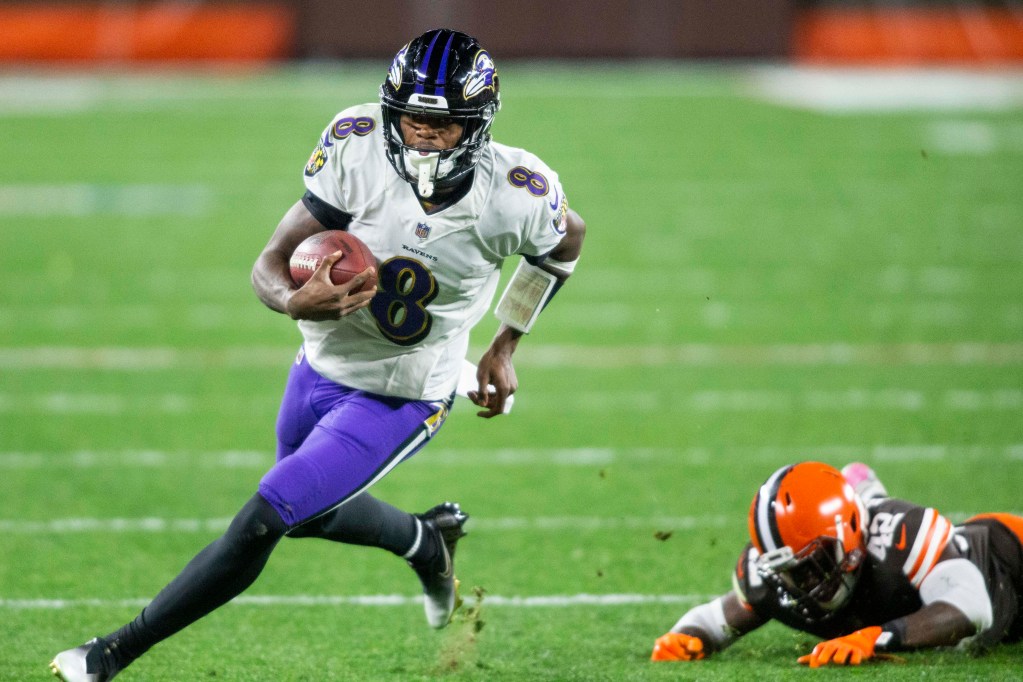
New York Giants: How to solve the last piece to the puzzle on offense

New York Giants, Matt Peart

The New York Giants went big in free agency, spending boatloads of money to provide quarterback Daniel Jones with sufficient weapons. The Giants signed wide receiver Kenny Golladay to a big multi-year contract. Golladay was the top wide receiver on the market and he will provide Jones with a dependable receiving option. The Giants also signed tight Kyle Rudolph to be a reliable receiving threat.

New York’s main point of emphasis entering free agency was to add playmakers for Daniel Jones. The Giants’ signal-caller is entering the third season of his career and it is crucial that Daniel Jones breaks out in 2021 to establish himself as a franchise quarterback.

Daniel Jones struggled in 2020 with a depleted group of playmakers and a poor offensive line. The Giants have fixed the playmakers. They added Golladay and Rudolph and also have Saquon Barkley returning from injury. There is also a chance the Giants add another playmaker to the mix in the 2021 NFL Draft. This is all great, but what has New York done to fix the offensive line?

The Giants have not done much to fix the offensive line. Fixing the offensive line is the last piece to the puzzle for the Giants to surround Daniel Jones with sufficient talent and have a good offense. Thankfully, the 2021 NFL Draft is full of pieces that might fit the puzzle.

Offensive linemen to target in the 2021 NFL Draft

The Giants could fix their offensive line through the 2021 NFL Draft. There is a plethora of offensive line talent in this year’s class. At the top of the class are a couple of phenomenal offensive tackle prospects, Rashawn Slater and Penei Sewell, who would be significant instant upgrades for the Giants. However, neither one of them is likely to make it out of the top ten.

At eleven overall, a realistic offensive line option for the Giants is Alijah Vera-Tucker out of USC. Vera-Tucker played left tackle for USC in 2020, but he is projected to be an offensive guard in the NFL, a position of need for New York. There are a lot of interior offensive line prospects to be excited about in the 2021 NFL Draft.

The second round of the draft might be a perfect opportunity for the Giants to find a new offensive guard. Prospects like Landon Dickerson and Creed Humphrey are phenomenal centers that could move to guard in the NFL. Wyatt Davis and Quinn Meinerz are a couple more offensive guards that might fit in perfectly with the New York Giants in the second round.

The Giants also have a question mark at right tackle. Dave Gettleman and the Giants seem confident in Matt Peart heading into his second season. But, Gettleman has also said in the past that he is not afraid to draft over players. Offensive tackle prospects like Teven Jenkins and Christian Darrisaw could make sense for New York in a trade-down scenario as they solidify their other offensive tackle position opposite of Andrew Thomas.

There is no shortage of offensive linemen in this year’s draft class. Quality offensive linemen are a premium in the NFL. The Giants need to take advantage of this year’s incredibly deep rookie offensive line class and give Daniel Jones everything he needs to succeed in 2021.

New York Jets: A history of multiple first round picks

New York Jets, Joe Namath

Barring any shocking trades, the New York Jets will have multiple first-round picks for the ninth time in franchise history.

For the ninth time in franchise history, the New York Jets fill out at least two draft cards during first-round action at the NFL Draft…barring any unforeseen developments, of course. New York holds the second overall pick in this year’s draft (one all but confirmed to be used on their next franchise quarterback), while they also hold the 23rd overall choice obtained from Seattle in last offseason’s Jamal Adams deal. The process is currently on pace to repeat itself next year.

How did the Jets and those picks of years gone by fare? ESM takes a trip down draft memory lane…

1965 (AFL)

  • QB Joe Namath, Alabama (1st)
  • RB Tom Nowatzke, Indiana (4th)

Namath was the subject of an AFL-NFL bidding war and was drafted by both leagues in November 1964. True to his larger-than-life form, Namath made some high-roller requests from his NFL employers, the St. Louis Cardinals (who chose him 12th overall). When the Cardinals made a request of their own (asking him to sign immediately, which would render Namath ineligible for the upcoming Orange Bowl against Texas), Namath turned them down and joined the Jets. He’d take his revenge against the NFL in the most iconic way possible, the legendary Super Bowl III triumph that changed the course of professional football.

The Jets had Denver’s pick in that same draft and took Nowatzke, a Big Ten rushing champion out of Bloomington. Nowatzke was the opposite of Namath, turning down the AFL to play in the NFL, chosen 11th by the Detroit Lions. He moved onto the Baltimore Colts, the Jets’ Super Bowl victims, in 1970 and wound up scoring the team’s lone touchdown in their Big Game triumph over Dallas two years after Namath’s guarantee.

1972

  • WR/TE Jerome Barkum, Jackson State (9th)
  • LB Mike Taylor, Michigan (20th)

Barkum quietly built one of the longest and successful receiving tenures in Jets history as both a receiver and a tight end. He reached a Pro Bowl in his second NFL season and stands as one of only four Jets to catch at least 40 touchdowns in green (Don Maynard, Wesley Walker, and Wayne Chrebet are the others). Barkum also ranks eighth in team history in career yardage (4,789) and ninth in receptions (326).

Taylor’s tenure wasn’t so prosperous. The consensus All-American lasted only two seasons in the NFL, opting to join the short-lived World Football League’s Detroit Wings after that.

1984

  • CB Russell Carter, SMU (10th)
  • DE Ron Faurot, Arkansas (15th)

Carter, another All-American nominee, had a strong start to his NFL career, earning four interceptions in his debut year. He notably earned AFC Defensive Player of the Week honors during Week 15 action in December through two sacks and an interception in a win over Buffalo. Alas, Carter never earned another NFL interception and lasted only four seasons in New York before partaking in two years with the Los Angeles Raiders to end his career. Making the Carter dropout all the more painful was the fact that Wilbur Marshall went to Chicago at No. 11. Marshall would join the Jets for his final season in 1995…after reaching three Pro Bowls and earning both a Super Bowl title and the NFC’s Defensive Player of the Year title.

Meanwhile, Faurot, acquired with a pick from New Orleans in exchange for former franchise quarterback Richard Todd, saw his career derailed by injuries and was released before the midway mark of his sophomore season.

1995

  • TE Kyle Brady, Penn State (9th)
  • DE Hugh Douglas, Central State (16th)

It’s probably not officially draft day until the networks roll the clip of horrified Jets fans booing the choice of Brady, who was chosen three picks before Warren Sapp (and Sapp’s fellow future Pro Bowlers Mark Fields and Ruben Brown) with their regularly scheduled first-round choice. Brady was serviceable over a 13-year NFL career spent mostly with Jacksonville, but New Yorkers never got over the rejection of Sapp.

The Jets later used the 16th pick acquired from Arizona (for receiver Rob Moore) to take NAIA standout Douglas. He burst onto the scene with 10 sacks and Defensive Rookie of the Year honors, but the Jets nonetheless dealt him to Philadelphia in a process that netted them three picks after his sack total dropped to 4.5 by his third season. A separate deal with Pittsburgh made it four picks gained from the Douglas trade. That quartet eventually became Dorian Boose, Kevin Williams, Eric Bateman, and Casey Dailey…none of whom left a sizable New York impact. Douglas apparently took the deal personally and put up two All-Pro seasons in a different shade of green, notably leading the league in tackles for a loss twice.

2000

  • DE Shaun Ellis, Tennessee (12th)
  • LB John Abraham, South Carolina (13th)
  • QB Chad Pennington, Marshall (18th)
  • TE Anthony Becht, Virginia (27th)

The cost was great…namely losing future Super Bowl champions Bill Belichick and Keyshawn Johnson…but the Jets managed to get four consistent contributors that set them up for a solid decade. Ellis and Abraham united for 126 sacks with a green oval on their helmet, while Pennington took over the franchise quarterback role by 2002, working with a reliable red zone target in Becht.

Between 2000 and 2005 (when Abraham departed for Atlanta through a trade we’ll get to in a minute), the Jets earned four winning seasons and won a pair of playoff games. Ellis became a franchise staple through 2010 and reached two Pro Bowls as a Jet. On the other side of the ball, Pennington earned the league’s Comeback Player of the Year honor in 2006, helping the Jets get back to the playoffs after missing a majority of the prior campaign with an injury. When the Jets moved on from Pennington in 2008 in favor of Brett Favre, he dealt revenge in the most painful way possible: a division title with the Dolphins with the finishing touches dealt at Giants Stadium.

2006

  • T D’Brickashaw Ferguson, Virginia (4th)
  • C Nick Mangold, Ohio State (29th)

By far the most collaboratively productive of the multi-first round classes, Ferguson and Mangold became cornerstones of the Jets’ offense, paving the way for the consecutive visits to the AFC title game in 2010-11.

The idea of Jets fans booing D’Brickashaw Ferguson seems downright absurd today, but it was a reality upon his drafting in 2006. Supporters desperate to see USC legend Matt Leinart come out to the east coast gave Ferguson a not-so-friendly welcome, but the Freeport native was able to silence his doubters 160 consecutive starts, three Pro Bowls, and a single missed snap later.

Meanwhile, Mangold arrived through a trade that sent Abraham down south and more than made up for the defender’s departure. His blocking intensity was matched only by his personality, one that continues to show itself through appearances at local sports events, namely New York Rangers games at Madison Square Garden.

2008

  • DE Vernon Gholston, Ohio State (6th)
  • TE Dustin Keller, Purdue (30th)

Blessed with another multi-pick first round two years later, the Jets again attempted to mine talent out of Columbus but came up horrendously short with Gholston. He was supposed to make a major difference in Rex Ryan’s 3-4 set, namely through his edge-rushing abilities. Gholston, unfortunately, failed to record a single sack over three seasons in green before he was unceremoniously released in 2011. Among the Pro Bowlers passed in favor of Gholston were Jerod Mayo, Ryan Clady (who played his final season with the Jets in 2016), and Jonathan Stewart.

A pick obtained from the Packers (sending over their second and fourth-round picks) was far more lucrative, even if his NFL time was unfortunately cut short. Keller was a reliable target and for four seasons before injuries took over his career.

2013

  • CB Dee Milliner, Alabama (9th)
  • DT Sheldon Richardson, Missouri (13th)

After a rocky rookie season, Milliner seemed to have some momentum going into his sophomore campaign with three interceptions over his final pair of games. Alas, he became another victim of the injury bug and wound up playing only eight more NFL games over the next two seasons.

The Jets didn’t miss out on much between Milliner and their pick obtained from the Tampa Bay Buccaneers for Darelle Revis, with Chance Warmack, D.J. Fluker, and D.J Hayden going in that span. Richardson was the eventual honoree in the 13th slot and enjoyed some good gridiron memories before legal issues caused the Jets to seek out a trade. He narrowly beat out Buffalo’s Kiko Alonso for the Defensive Rookie of the Year award and also stands as the only defender in Jets history to earn two rushing scores (briefly lining up as a fullback in goal-line situations). Richardson was traded to Seattle in 2017 and is currently a free agent after wrapping up a two-year stint in Cleveland.

Geoff Magliocchetti is on Twitter @GeoffJMags


New York Giants: Trade-down mock draft scenario that makes the defense dominant

new york giants, jaelan phillips

The New York Giants are preparing for an interesting 2021 NFL Draft. This year’s draft sees a plethora of talented quarterbacks set to be taken in the top ten. This run on quarterbacks could lead top-talented players at other positions to slip outside the top ten.

The Giants are sitting in a pretty spot at eleven overall. Realistically, the draft’s top non-quarterback prospects could be on the board when the Giants are on the clock. New York could stick and pick the best prospect available. Or, Dave Gettleman can elect to do what he has never done before: trade down.

According to Ian Rapoport, trading back is “already something they are internally considering.” Rapoport adds that the eleventh overall pick “will have real value.” What would it look like if the Giants traded down from eleven?

New York Giants trade-down scenario

MOCK TRADE:

  • NYG receives: 15th overall pick, third-round pick (96 overall), fourth-round pick (139)
  • NE receives: 11th overall pick

The New England Patriots are a team that has been rumored to be interested in trading up to draft a quarterback. In this mock scenario, assume that Mac Jones falls to eleven and New England is prepared to trade up in an effort to find their franchise quarterback. Multiple teams might be interested in drafting Jones, so New England makes the move to eleven to secure their quarterback before anyone else can.

The Giants move back four spots and gain an extra third-round pick and an extra fourth-round pick. According to Dan Duggan of The Athletic, this is fair and realistic compensation based on the parameters of two recent trades in reality.

The Mock Draft – What could those picks turn into?

Pick 15 – EDGE Jaelan Phillips, Miami

The Giants move down four spots here and address a major position of need. New York’s defense almost has it all. They have some dominant hog mollies on their defensive line. A secondary full of shut-down corners and versatile safeties. But the second level is lacking pass-rush ability.

New York needs a big-time edge rusher, and in this mock draft, they found one. The Giants are reportedly interested in multiple edge rushers, including Azeez Ojulari, Kwity Paye, and Jaelan Phillips.

Most analysts believe Jaelan Phillips would be a top-ten pick if not for medical red flags. The Miami pass-rusher is absurdly talented and athletic. Phillips recorded 8 sacks and 15.5 tackles for loss in his breakout 2020 season. He is projected to be drafted in the second half of the first round, but considering the Giants’ need for an EDGE, Phillips makes sense for them at fifteen overall. The Giants need an edge rusher, and if Jaelan Phillips is the top EDGE on their board, he would be a perfect fit for them in a trade-down scenario.

Pick 42 – iOL Landon Dickerson, Alabama

In this mock draft, the Giants went defense in round one. But New York has needs on the offensive side of the ball that must also be addressed. According to Paul Schwartz of the NY Post, “it will be a surprise if the Giants do not take an offensive lineman with one of their first three picks” because of their lack of depth on the interior.

Landon Dickerson is another player with medical red flags. He tore his ACL last season and has suffered other significant injuries in the past. However, when healthy, Dickerson is a dominant force on the interior of the offensive line.

Dickerson is a phenomenal run-blocker, earning Pro Football Focus’shighest run-blocking grade in the SEC last season with a grade of 92.8. Landon is also incredibly versatile, a trait Joe Judge values highly. While he might be listed as a center, Dickerson is an option for the Giants because he played multiple positions in college. Dickerson logged snaps at every position on the offensive line during his time at Alabama. He played the majority of his snaps at center, but did play over 200 snaps at right guard in 2019 and could make the transition back there in the pros.

This is a risky draft for the Giants. But it is more about the positions they are targeting. Jaelan Phillips and Landon Dickerson are both players with lengthy injury histories. However, Phillips could be swapped out with Azeez Ojulari or Kwity Paye, and Landon Dickerson could be swapped out with Quinn Meinerz, Creed Humphrey, or Wyatt Davis. Whoever the Giants rate highest at these two positions should be the selections at these picks.

Pick 76 – CB Benjamin St-Juste, Minnesota

It never hurts to have depth in the secondary. Benjamin St. Juste out of Minnesota is a cornerback that fits well in New York’s defensive scheme. He is a tall (6 feet 3 inches) corner with the size and physicality to play outside. St-Juste is aggressive in press coverage, making him a good fit for what Patrick Graham likes to do defensively.

The Giants just signed cornerback Adoree’ Jackson to a big contract. But Adoree’ is another player with an injury history. Additionally, cornerback is a position that is frequently injured. The Giants know all too well what can happen when you have a lack of depth in the secondary (see the 2020 matchup against Cleveland). Adding Benjamin St-Juste provides New York with quality cornerback depth in an outside cornerback that could develop into an eventual starter.

Pick 96 – iDL Tyler Shelvin, LSU

Again, this pick could be a number of interior defensive linemen. But Tyler Shelvin is a talented player in a weak defensive tackle class that the Giants have shown some interest in. Tyler Shelvin stated in a press conference that he has spoken with the Giants, per Usayd Koshul.

Shelvin is a solid nose tackle that could be New York’s Dalvin Tomlinson replacement. Tyler Shelvin is a phenomenal run-defender with great strength and power at the point of attack. The Giants would be finding a likely starter on their defensive line with this pick.

Pick 139 – WR Jaelon Darden, North Texas

At some point in this mock draft, the Giants should add another offensive weapon. In the fourth round, Jaelon Dardon out of North Texas provides great value for the Giants. Darden is looked at as a second-round talent to many draft analysts.

Jaelon Darden is a weapon with the ball in his hands. According to Pro Football Focus, Darden recorded the highest missed tackle rate per touch in 2020 amongst wide receivers at 31%. His missed tackle rate was higher than Kadarius Toney’s (30%). Darden is being slept on as a premier slot receiver. He recorded 16 touchdowns out of the slot (the most in college football) and 935 receiving yards (second-most) in 2020.

Sterling Shepard is set to be the Giants’ starting slot receiver in 2020. But, looking down the road, Darden might be the perfect player for New York to develop as their eventual slot receiver once Shepard’s contract expires.

Recap

The Giants turned their defense into a dominant unit in this mock draft. New York found a new starting edge rusher in round one, added depth at cornerback in round three, and secured their Dalvin Tomlinson replacement at nose tackle with their second third-round pick. The Giants did all this while improving their interior offensive line and adding an offensive playmaker to the mix. Overall, this is a trade-down mock draft scenario that Giants fans would be ecstatic about. The Giants addressed all of their biggest needs with talented players, making five selections in the first four rounds. Trading down is something the Giants need to consider in 2021 more than ever.

Why the New York Giants should target wide receivers and cornerbacks in the 2021 NFL Draft

dyami brown, new york giants

The NFL Draft is less than two weeks away from finally taking place. The New York Giants are looking ahead to an exciting draft after a successful free agency period. The Giants retained their best free agent, Leonard Williams, while also adding two new offensive weapons and a stud cornerback.

The Giants plugged almost all of their holes in free agency and upgraded their roster thoroughly. But there are a few areas where the Giants could still improve. One of those areas for New York to improve is depth. The Giants should be able to improve their depth drastically with a loaded 2021 NFL Draft class.

The Giants made a huge upgrade at wide receiver in free agency by signing the market’s top playmaker, Kenny Golladay, as their new alpha dog receiver. They also made another splash when they signed Adoree’ Jackson to be their second starter at outside cornerback. Still, the Giants should target wide receivers and cornerbacks in the 2021 NFL Draft. Depth is important but this year’s draft class is also loaded with talent at those positions.

Why the Giants should target WR’s and CB’s in the draft

The 2021 NFL Draft is loaded with wide receiver and cornerback talent. According to Field Yates and ESPN, there are more wide receivers (17) and cornerbacks (16) ranked inside NFL scouts’ top 100 big boards than any other positions.

Wide receiver and cornerback are two positions where depth is an absolute necessity in the NFL. Injuries at those positions are abundant, as Giants fans should be fully aware. But there is also a competitive advantage to be gained by stockpiling wide receivers and cornerbacks.

Wide receivers and cornerbacks are positions where there are multiple starters at the same position. Typically, teams start two wide receivers outside and two cornerbacks outside. WHen a team improves its primary wide receiver or cornerback, the wide receiver or cornerback that used to be the primary then becomes the secondary. Moving to the secondary role means facing secondary competition, thus creating a competitive advantage.

The Giants would be wise to gain depth at cornerback and wide receiver. But they would also benefit from having their top corner or receiver become their second-best corner or receiver to face off against lesser competition and win matchups regularly.

When considering how much talent is stockpiled at the wide receiver and cornerback positions in the 2021 NFL Draft class, it is evident that the Giants need to target those positions in this year’s draft.