No, you’re not seeing double, the New York Jets selected Michael Carter Jr, but this one plays on the other side of the football. The Duke corner is 5 foot 9 1/2 and 186 pounds. The 4 year player at Duke did everything the right way. Carter waited in the wings, but quickly earned starting reps. His growth in his Sophomore season earned him the Willis Aldridge Award for best defensive back in the Blue Devils program. He then repeated as the winner in his junior year as well. Carter played the most snaps on the team in that season while taking reps at kick returner as well.
Carter has versatility and athleticism that will allow him to take reps at safety if needed, but more than likely slot in nicely as a corner for a team with minimal depth at the position. Carter runs a 4.30 40 yard dash and can keep up with some of the best burners at the next level. He also adds a dimension to Brant Boyer’s special teams unit given he could compete for the returner role.
Carter has had production at the defensive back position posting 41 tackles, 3.0 TFLs, 2 INTs and 8 passes defended last season. He also ranked in the top 10 in the ACC in passes defended and was a third-team All-Acc recipient.
Off the gridiron Carter is exceptional as well. Continuing the trend of high character additions, Carter was team captain his senior season and well regarded by the entire Blue Devil team. He’s got maturity and leadership traits that you long for in a developmental player. Carter may earn reps early due to a lack of depth, but his potential at slot corner (a position the Jets don’t have an answer at right now) is very tantalizing.
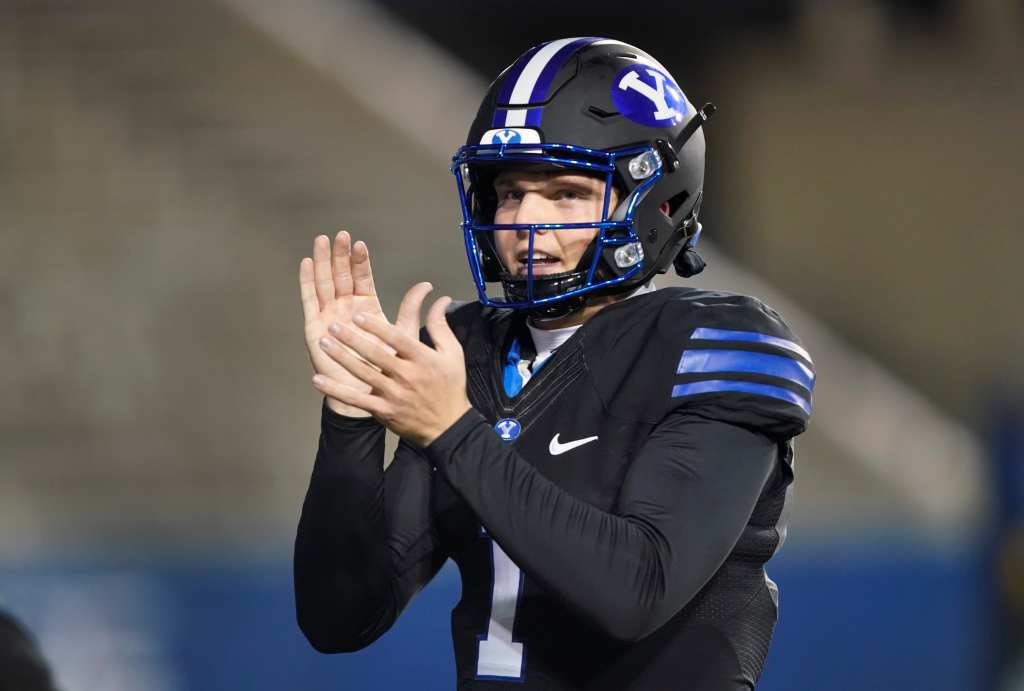
The New York Jets have selected RB Michael Carter from the University of North Carolina with the 107th pick in the 2021 NFL Draft. After drafting QB Zach Wilson from Bringham Young University, IOL Alijah Vera Tucker, and certified weapon from Ole Miss Elijah Moore. Now, the plan to put Zach Wilson in the best position possible continues. The Jets drafted a talented back in Carter.
In High School, Carter ran for over 2,500 yards in his senior season. The explosiveness carried over to Chapel Hill as he had 3,404 yards in his time with the Tarheels. That number puts him in the record books with the fourth best total in the school’s history. His burst and athleticism is evident in all facets of his game.
Last season on the ground, he rushed for a whopping 8.0 yards per carry, which was fifth in the NCAA last season. He also had 684 yards before contact, which was fourth best in the college ranks last year. On top of that, he had 267 yards receiving and 11 total scores last season. Oh yeah, and he did this alongside fellow draft pick and now Bronco running back Javonte Williams.
His talent is apparent, and he’s an even better guy off the field. He was voted team captain, and despite the fact he and Williams could’ve been at odds competing for reps, he was happy taking whatever role possible to benefit the team. Carter projects as a top-tier change of pace back at the next level, and he will slot in with Tevin Coleman, La’Mical Perine, and Ty Johnson as the backfield committee looks set heading into the 2021-22 season. This should allow the pressure on Zach Wilson to continue to ease while providing Mike LaFleur even more weapons in his first season as Offensive Coordinator.
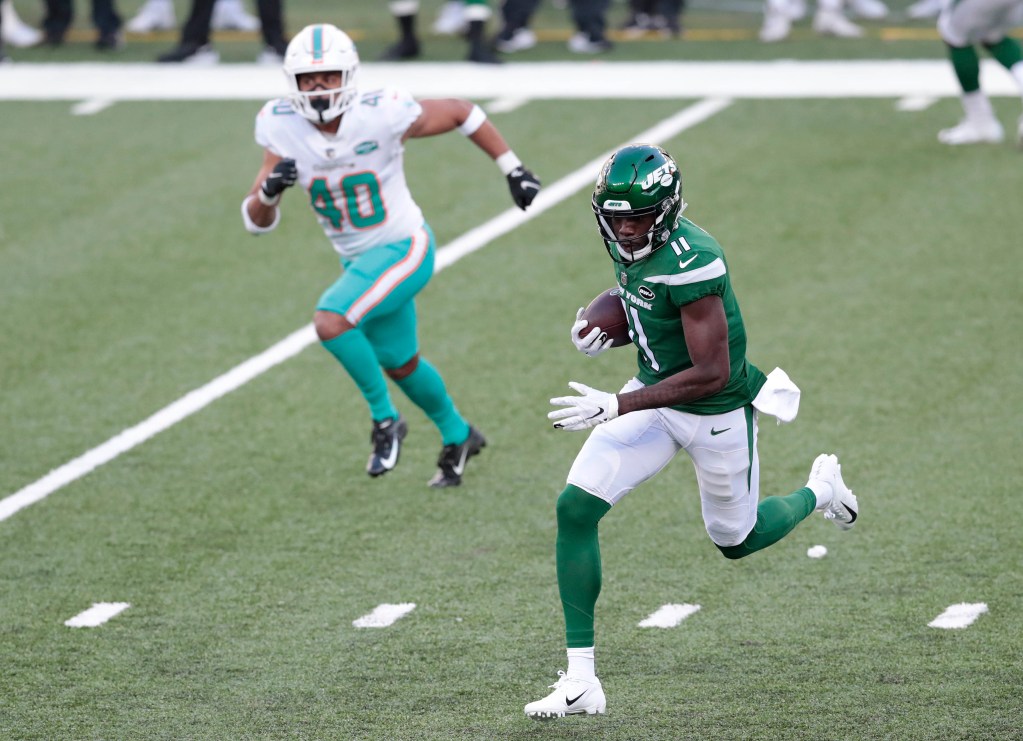
With the second overall pick on Friday, the New York Jets chose Ole Miss receiver Elijah Moore, a consensus All-American.
If the 34th overall pick is the New York Jets’ only selection on Friday, they made the most of it in the form of Ole Miss receiver Elijah Moore, the 34th overall pick of the 2021 NFL Draft.
Moore, 21, is coming off an illustrious career in Oxford, earning 2,441 yards on 189 catches (good for fourth in each respective category in school history), scoring 16 touchdowns. He earned consensus All-American honors and first-team All-SEC honors in his senior year.
Moore was welcomed in by former Laveranues Coles, who announced his selection to the crowd gathered in Cleveland. Before revealing his name, Coles called him a “future Pro Bowler”, predicting he would follow in his 2003 footsteps.
Despite playing in only eight games, Moore earned 1,193 yards on 86 receptions in his junior season before opting to join the 2021 draft class. Though his size (5’9) scared some teams off, he earned positive reviews for his separation and route-running.
“He’s not very big, but he’s stronger than his measurables might suggest and he’s shown a fearlessness to make the catch despite impending punishment,” NFL.com’s Lance Zierlein said of the former Rebel, comparing him to Antonio Brown. “Moore has the short-area quickness to snap off crisp routes underneath for separation and the play speed to challenge over the top as well as work the deep middle. He has soft, sure hands and above-average ball skills with a great feel for spatial awareness to hit the sweet spots when working against zone.”
Moore joins a talented and young receiver class that includes incumbents Denzel Mims and Jamison Crowder and veteran free agent newcomers Corey Davis and Keelan Cole.
Barring any trades, the Jets’ next pick will come in the fourth round, the second selection, and 108th overall.
With their quarterback quandary solved and a blocker in tow, perhaps a bigger challenge awaits the New York Jets on Friday.
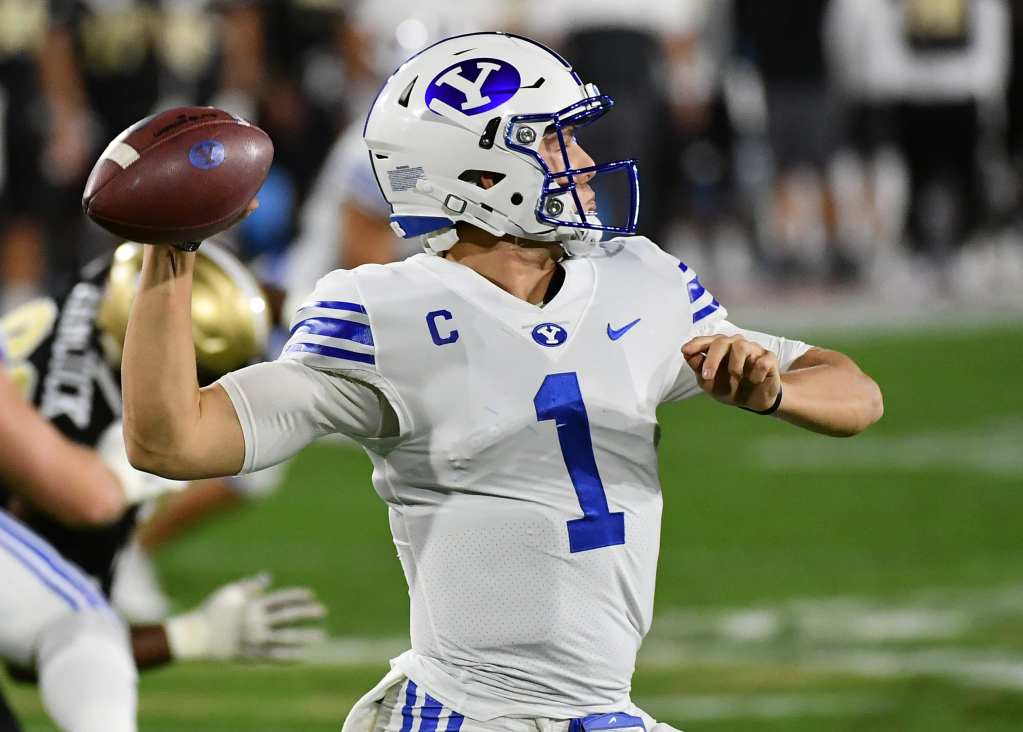
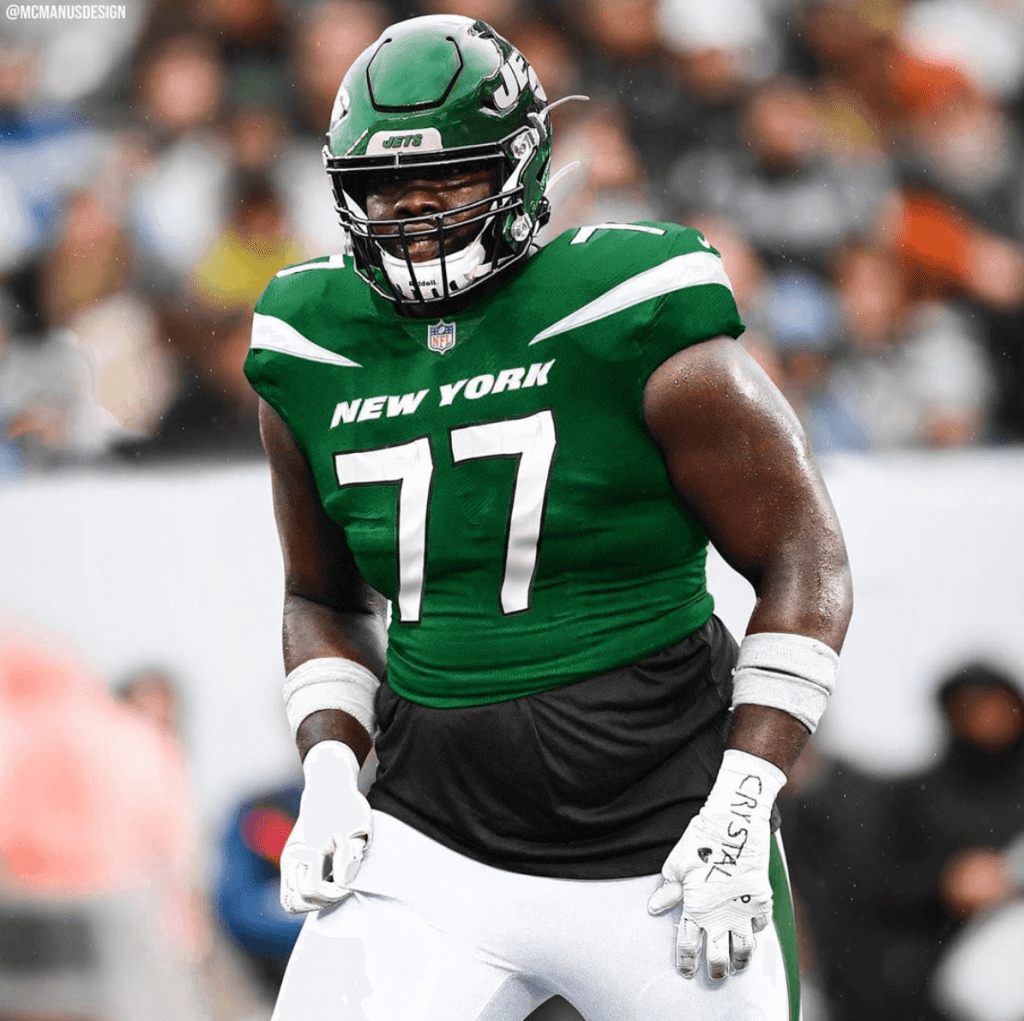
Zach Wilson’s aerial talents have landed in Florham Park. He’ll have some protection working with him in the form of Alijah Vera-Tucker, who came by in the 14th overall selection obtained from the Minnesota Vikings. The New York Jets’ problems aren’t fully solved, but at least there’s a path toward officially making things right.
But the immediate stages of that journey leave little opportunity to rest. The NFL Draft continues on Friday night, with the next two rounds being staged in Cleveland (7 p.m. ET, ESPN/ABC/NFL Network).
The Jets accomplished their goals on day one; how can they keep the good weekend vibes going?
Get More Picks
The arrival of Alijah Vera-Tucker came at a major price: the Jets went from three Friday picks to one: the 34th overall choice, also known as the second pick in the second round.
It’s probably silly to assume that the Jets would be willing to send their fans to bed early with only a single pick, especially when their defensive woes haven’t been addressed at all (more on those in a minute). Douglas said in his first-round aftermath that he wasn’t willing to rush things.
“We’ve been able to acquire a lot of picks and you saw the flexibility that that gave us tonight. We’ll see how tomorrow goes,” Douglas said, per Max Goodman of Sports Illustrated. “Obviously, we’re going to have discussions, we’ll see if the phone rings, we’re open to any discussion, as I’ve told you guys in the past. We’ll see how it plays out over the next two days.”
The odds are slightly stacked against them for the time being, but with so much strong talent left on the board, it would be an absolute sin for the Jets to choose only once on Friday night. Even if it means moving out of the 34th slot, something has to be done.
Address the Defense
It’s great the Jets have created a new offensive identity after bringing in Wilson and Vera-Tucker with their opening picks. But it doesn’t mask the issues they have on defense. Their defensive woes…ones that mostly centered on inexperienced projects like Bless Austin, Ashtyn Davis, and Bryce Hall…probably should’ve been addressed during free agency, but they should definitely try to find an instant defensive contributor on Friday. In the final lead-up to the draft, Douglas insisted that the Jets couldn’t afford to focus on one side of the ball and needed a sense of balance in their 2021 draft plan.
“There is a balance you’re trying to strike,” Douglas said, Brian Costello of the New York Post.“You’re trying to build the best team that you can possibly build. That’s offense, defense, and special teams. There also is an importance to really doing everything we can to provide what we can to make a young quarterback successful. There is some balancing that goes into that.”
The Jets did a solid job of adding veterans of the 4-3 defense in the earlier parts of the offseason (Carl Lawson and Jarrad Davis) and could help the presumed transition under Robert Saleh and Jeff Ulbrich go a bit smoother if they find rookies who have worked in the formation as well. Zaven Collins, who went two picks after Vera-Tucker, would’ve been a strong fit after his time at Tulsa. Notable names on the draft board include Joseph Ossai of Texas and Wake Forest’s Carlos Basham.
Keep Helping Wilson
This draft obviously centers on Wilson, and rightfully so. Every move the Jets make over the next few days should be dedicated to making him as comfortable as possible. They failed to help Sam Darnold, and now his fifth-year option is getting exercised in Carolina. The best way to do that is to trade back into the second and third rounds tonight, as Friday has often been a perfect place to find instant contributors and depth options alike.
The Jets must also remember to keep the proverbial balance that Joe Douglas has sought. A good defense can help keep manageable game situations for Wilson to work with and improvements on that end should thus not be ignored. New York should also keep building the wall in front of Wilson. His old Provo teammate Brady Christensen would be a match made in gridiron heaven. Even special teams could find their way into the day two proceedings. A player like Western Michigan’s D’Wayne Eskridge (who previously worked with Jets assistant Jake Moreland) is not only one of the MAC’s top receivers but also made a name for himself in the Broncos’ return game.
The New York Jets will definitely take a quarterback second overall, but where could they take some other offensive roles?
The New York Jets know what they have to do when it comes to the NFL Draft, which begins on Thursday night (8 p.m. ET, ABC/ESPN/NFL Network). Questions, however, still linger. Who will they pick? When will they address each position and need?
ESM attempts to answer the latter question, starting with the offensive end…
Quarterback
It’s more or less a foregone conclusion that the Jets are taking a quarterback with the second overall pick, and John Beck has all but confirmed that it’s going to be his pupil and fellow BYU legend Zach Wilson. Whether it’s Wilson or a non-Provo surprise, the Jets have no other choice. The Deshaun Watson sweepstakes are over and their current options are James Morgan and Mike White, they of a combined zero NFL passes. Everything they’ve done this offseason has led to this: it’s quarterback or bust with their highest choice since 1996.
The Jets are in desperate need of a backup, but the draft is definitely not the place to get that, a la the Washington draft in 2012 (Robert Griffin III at No. 2, Kirk Cousins in the fourth round). Besides, they’re already burdened with one unnecessary quarterback, inexplicably draft Morgan in the fourth round before instant contributors like Gabriel Davis and DeeJay Dallas. There’s no need to add another after Wilson.
The Perfect Spot: No. 2 pick
Running Back
No matter who the Jets draft at second overall, his job can be made a whole lot easier if they have a serviceable run game to help him out. They had a trio of young projects (La’Mical Perine, Ty Johnson, Josh Adams) but enjoyed a sizable veteran upgrade capable of making an impact through the addition of Tevin Coleman. While Coleman is only in town on a one-year deal, the addition allows the Jets to bide their time in finding a long-term solution at running back. Adding another young rusher to the mix sounds fair, but Coleman and a deep rushing class allow the Jets to address other needs with their early picks.
The Perfect Spots: Day 3
Wide Receiver
The receiver spot was one of the most drastically upgraded areas on the Jets’ roster through free agency. While the Jets might still lack a true No. 1 target, they now have four guys who can realistically fill and compete for that role (newcomers Corey Davis and Keelan Cole join incumbents Denzel Mims and Jamison Crowder). Much like Coleman, the free agency haul allows them to be patient, though they could still be inspired to take a receiver after they fulfill their early needs.
The Perfect Spots: Round 3 and beyond
Tight End
The last survivor from their ill-fated fashion show, Chris Herndon is perhaps the most prominent face left over from the Todd Bowles era. Though he has struggled to maintain his rookie year production thanks to a suspension and injuries, last season ended on a promising note (11 receptions, 97 yards, 2 touchdowns over the last couple of games). That might be enough for them to wait a little bit before they add a potential replacement.
Beyond the brief Herndon resurgence, there’s a drastic talent drop in this position class after the highly coveted Kyle Pitts, who will likely be long gone by the time the Jets make their second pick in the 23rd slot. The addition of Tyler Kroft and re-signing of Daniel Brown also ensures that the Jets can wait to add another tight end. It’s not an elite group on the current roster by any stretch, but there’s enough solid personnel here that the Jets can worry about more desperate areas come Thursday and Friday.
The Perfect Spots: Day 3
Offensive Line
When it comes to their blocking, the Jets should draft early and draft often.
Had the Jets kept Sam Darnold, the second overall pick could’ve well been used on a blocker (i.e. Penei Sewell). While the Jets made some improvements throughout the roster, the blocking went mostly unaddressed as they added only Dan Feeney and Corey Levin, who likely won’t provide the blocking revolution the Jets need when making the transition to a new franchise quarterback. They have the capital to make up for lost time in the draft to put some heat on the incumbent blocking group and give the thrower, Wilson or otherwise, a solid foundation to work with.
Drafting Mekhi Becton and passing on elite receiving talent with the 11th overall pick was last season was a necessary move that paid big dividends. But more work is needed. Any pick used on a blocker after the inevitable quarterback at No. 2 can be a wise investment that continues Joe Douglas’ quest to make amends for the blocking negligence of the Mike Maccagnan era.
The New York Jets could use all the help they can get at the NFL Draft and should thus leave no stone unturned.
When you’re coming off a two-win season in the latest addition to a playoff drought that’s getting old enough to see a PG-13 movie on it’s own, you probably can use all the help you can get.
The New York Jets, fresh off a brutal season even by their own star-crossed standards, should thus leave no proverbial stone unturned as the NFL Draft commences on Thursday (8 p.m. ET, ABC/ESPN/NFL Network). Sure, talent from the “Power Five” conferences (and Notre Dame) rules the draft boards across the league, but prospects from the unsung mid-major conferences and schools deserve their fair share, especially with their seasons shortened or outright cancelled.
Jets fans have certainly had their share of this phenomenon, as many believe that Zach Wilson from independent BYU will hear his name called after Trevor Lawrence. But a plethora of mid-major talent resides beyond Provo and the Jets aren’t in a position to turn down assistance from any source.
ESM has six names to keep an eye on as the walk to the commissioner’s podium nears…
T Spencer Brown, Northern Iowa
The Jets apparently have the new quarterback’s blind side taken care of in the form of Mekhi Becton. But the right side is a bit less certain with George Fant and Chuma Edoga the current names on the depth chart. Brown didn’t partake in UNI’s shortened season (which ended earlier this month) but put the lost time to good use: he’s been working out and training under the guidance of former San Francisco mainstay Joe Staley.
Brown’s draft stock, perhaps unfairly, dropped after he opted out of the 2021 proceedings, which could allow the Jets to scoop him up on the latter days. They’re currently on pace to roll out the same starting five blockers they had in last season’s opener. Adding Brown could at least apply some heat on the right side come training camp.
WR D’Wayne Eskridge, Western Michigan
Eskridge has a bit of history with the Jets or at least a member of their new coaching staff. While a shared WMU experience with Corey Davis surely can’t hurt, All-MAC first-teamer’s term in Kalamazoo coincided with assistant offensive line coach Jake Moreland’s time as offensive coordinator with the Broncos.
As a former defensive back and track star who became renowned for his speed, Eskridge could define the balance that general manager Joe Douglas is looking for. He even became an accomplished special teams contributor, serving as the Broncos’ primary kick returner during their six-game endeavor last fall. The Jets have ranked 22nd and 28th in return average over the last two seasons after losing Pro Bowler Andre Roberts. It seems like a trivial matter, but starting with good field position could make the job of the new franchise quarterback much easier.
QB Trey Lance, North Dakota State
The consensus No. 2 pick appears to be Wilson, but Lance deserves his due diligence from Thursday’s early choosers. As the latest NFL hopeful emerging from the gridiron dynasty in Fargo, Lance won the 2019 Walter Payton Award the FCS equivalent of the Heisman whose previous winners include Steve McNair, Brian Westbrook, Tony Romo, and Cooper Kupp. Lance was responsible for 3,886 yards and 42 touchdowns in 2019 and threw no interceptions in 287 attempts.
Recency bias may work against Lance, as he struggled in a de facto exhibition against Central Arkansas last fall (he sat out of NDSU’s ongoing spring season). Teams have also become increasingly wary of one-season wonders (i.e. Mitchell Trubisky) as Lance started only one year with the Bison. But his rushing talents could tantalize the Jets, who have never worked with a mobile quarterback for an extended period of time (Geno Smith being a rare exception).
C Quinn Meinerz, Wisconsin-Whitewater
Division III draft picks are few and far between, though Jets fans may remember Joe Fields (Widener) and undrafted Bruce Harper (Kutztown) fondly. Meinerz, a D3 All-American, could be next and could as an instant contributor if the Jets were to inquire for his services. The outright cancellation of the Warhawks’ season made it difficult for Meinerz to make an impact, but took advantage of an invite to Mobile’s Senior Bowl, where he showcased strong hands and athleticism.
Finding the right center will be vital to the Jets’ new operations under the incoming quarterback. Sam Darnold went through three different primary centers during his three-year term. The last, Connor McGovern, is set to return but the Jets could probably still look to upgrade the interior through this diamond in the rough.
TE: Quintin Morris, Bowling Green
If the Jets are looking to put some heat on Chris Herndon beyond Tyler Kroft, they should look for a tight end who can contribute to the box score.
Morris, a three-year starter who also worked as was a bright spot for an otherwise dismal BGSU program, earning first-team All-MAC honors in the Falcons’ shortened season. In the last two full seasons, Morris earned 11 touchdown passes, including seven during a turbulent sophomore season in 2018 (which saw an in-season coaching change). Morris’ propensity for scoring could help him develop a niche as a goal-line option, which the Jets could sorely use after ranking dead last in the league by scoring touchdowns on 42 percent of their red zone possessions.
RB: Jaret Patterson, Buffalo
Whether it’s through standard MACtion or downright historic efforts, even casual college football fans are aware of Patterson’s efforts in Western New York. A 409-yard, eight-touchdown tally in November against Kent State officially put him on the map, part of a stellar, shortened season (1,072 rushing yards, 19 touchdowns in six games).
Thanks to the signing of Tevin Coleman and a group of young projects, the Jets can probably wait until the latter stages of the draft to address their running back situation. Patterson could be a solid find through his strong build (195 lbs.) that makes up for his height (5’6). As a bit of a hesitator with strong speed, Patterson could become what Le’Veon Bell was supposed to be if he were to join the Jets.
The New York Jets obviously need to get a quarterback, but some holes are more vital to fill than others after the second overall choice.
The New York Jets are in a macabre yet inspirational spot as the NFL Draft commences on Thursday (8 p.m. ET, ESPN/ABC/NFL Network): the past two seasons were so bereft of hope and good vibes that it’s almost impossible to end draft weekend on a sour note.
Hope will undoubtedly stem from whomever the Jets choose second overall in the opening round through a pick that more than likely will be used on a quarterback. But no matter which of the non-Trevor Lawrence passing picks hears their name called…be it Zach Wilson, Justin Fields, Trey Lance, Mac Jones, or otherwise…they’re not going to transform this franchise single-handedly. Further help is needed and there’s no better place to gain it than by assembling a strong class of his 2021 peers.
What should the Jets’ primary, non-quarterback objectives be? ESM investigates…
Make No. 2 the No. 1 Priority
Unless the Jets make the jaw-dropping decision to start James Morgan or Mike White…or, make the more optimistic but equally shocking choice to wait until later in the draft to choose a thrower…the Jets are taking the new face of their franchise at second overall. Expecting him to completely turn the franchise around is cruel and unusual football punishment. Every move they make from there on out must be centered on making the new quarterback’s metropolitan life easier.
One could assume that means loading up on offensive talent, but that view is misguided. For one thing, the newcomer has several new, knowledgeable weapons to work with (Corey Davis, Keelan Cole, Tevin Coleman). Sure, further offensive adjustments are needed (more on that in a minute) but general manager Joe Douglas knows that a balance through all sides of the ball must be struck to help the team move forward. It’s not exactly beneficial if the quarterback has to constantly play from behind, after all.
“You’re trying to build the best team you can possibly build,” Douglas said in video provided by the Jets. “That’s offense, defense, and special teams. There also is an importance to really doing everything we can to provide what we can to make a young quarterback successful. There is a balance that goes into that.”
Upgrade the Blocking
Had they not traded Sam Darnold, the Jets’ first choice at second overall (or perhaps a trade down) could’ve allowed them to address their dire blocking situation. Despite some big names on the open market, the Jets did little to address their porous offensive line issues. If the season started tomorrow, they’d likely go into Week 1 with the same starting lineup they had in front of Darnold during their opening weekend loss in Buffalo last year. The Jets let up 43 sacks last season, fourth-worst in the AFC. That also did a developing run game no favors, especially for a running back who waits for the hole like Le’Veon Bell.
Douglas has made an effort to address the blocking negligence of the Mike Maccagnan era. His first moves in office were to trade for incumbent starter Alex Lewis and convince All-Pro Ryan Kalil to come out of retirement. He used his first New York draft pick on Louisville tackle Mekhi Becton, passing on name-brand receiving talent after spending most of last year’s offseason budget on veteran blockers. Only the Becton move appears to be working out thus far, but Douglas has made it clear he views a revamped offensive line as a vital part of the Jets’ potential resurgence.
The management’s failure to make an impactful blocking addition via free agency is a bit surprising considering the importance they’ve placed on blocking endeavors. But this week, and the plethora of picks that come with it, gives the Jets a chance to make up for lost time.
Fortify the Aerial Defense
The Jets can’ just worry about their own quarterback situation…they have to stifle the progress of others. Even if one can say this is a rebuilding season for New York, the foreseeable future likely guarantees a yearly pair with Josh Allen. Another first-round thrower might to go to New England at No. 15. The Jets need to something, anything, to make their defense scary again. Their most recent playoff trips were defined a good blocking foundation and a dominant pass rush. Neither has been the same in the ensuing years of futility.
Passing can’t harm the Jets (who let up 4,409 yards last season) when the opponent can’t get them off in the first place, but the pass rush has been dormant, even with Quinnen Williams and John Franklin-Myers breaking out last season. The interior linebacker situation will enjoy an upgrade with both C.J. Mosley and Blake Cashman set to return while Jarrad Davis brings 4-3 experience. If the Jets do opt to go defense with their other first-round pick (23rd overall), they should use on a 4-3 pass rusher like Zaven Collins. The Tulsa linebacker has shown a great pass rushing ability and strong athletic abilities that will have him off the board by early Friday at the latest. Collins’ work in the Golden Hurricane’s 4-3 set only strengthens the match between them.
New York could also potentially benefit from adding another early name or two to their secondary situation. Young projects like Bless Austin, Bryce Hall, and Ashtyn Davis currently top the depth chart and while there’s potential, it’s fair to question the Jets’ comfort over their potential as Week 1 starters. Prime talent within the first two rounds (perhaps the Jets’ third choice at No. 34) could raise some heat in secondary drills at camp and put the coaching staff at slighter ease.
It’s a foregone conclusion that the New York Jets will draft a quarterback at No. 2. But what will they do with their latter Thursday choice?
If this is the most pressing of problems the New York Jets have for the remainder of 2021, they’ll be one of the most, if not the most, blessed teams in all of professional sports.
The Jets have a welcome dilemma when the first round of the NFL Draft is held in Cleveland on April 29 (8 p.m. ET, ABC/ESPN/NFL Network). They’re one of a handful of teams with multiple first round picks, first choosing in the second slot before reaping the fruits of the Jamal Adams trade at 23rd overall. Though the second pick is more than likely spoken for…barring a jaw-dropping pre-draft surprise, the Jets will undoubtedly be taking a quarterback…there’s a major decision to be made in the latter station, a place where this draft’s predictability should be long gone.
When you’re a team like the Jets…coming off a two-win season, one even more brutal than this star-crossed franchise’s usual standards…
Mandatory Credit: Jasen Vinlove-USA TODAY Sports
Make the quarterback as comfortable as possible
When it comes to the second overall pick, the Jets have answered the question of what. Unless they plan on starting James Morgan, their 2020 fourth-round choice who has yet to wear an NFL game jersey, they’re drafting a non-Trevor Lawrence quarterback, be it Zach Wilson, Justin Fields, or an unknown third party.
Whoever it is, he’s going to need help, whether it’s through protection or weaponry (more on each of those in a minute). One of the things that doomed Sam Darnold’s New York career was the lack of stability on his end of the ball. By the time his third season began, no receivers from his rookie season (with the exception of tight end Chris Herndon) remained on the New York roster and his starting offensive line was completely different from even the year prior. The Jets need homegrown talent to help their new, young franchise man get used to the NFL game in a hurry.
The draft is also a more attractive option for the Jets to find offensive help because their last few big-ticket offensive arrivals from elsewhere (i.e. Le’Veon Bell) haven’t worked out. If they can build through the draft…and there’s a prime opportunity with 21 picks over the next two years…they can lay a foundation and rebuild a winning culture.
Mandatory Credit: Vincent Carchietta-USA TODAY Sports
Big plays are here again
So the Jets need offense, but that decision begets a decision: should they take a box score contributor or build the wall in front of Wilson/Fields/Other?
In the case of the former, it’s been a while since the Jets have had a truly explosive offense. It’s only been five seasons since Brandon Marshall and Eric Decker put up dueling 1,000-yard tallies during the bittersweet 2015 campaign, but that might as well be an eternity in football years. Making matters worse is that the Jets made little effort to keep Robby Anderson, the closest thing they had to a consistent playmaker. He posted career-best number in Carolina last season and now reunites with Darnold.
The Jets have assembled a decent core of veterans with Corey Davis and Keelan Cole joining the fray alongside incumbent slot man Jamison Crowder and sophomore Denzel Mims. But while drafting Mekhi Becton was a move no one could truly quarrel with, the Jets passed on name-brand receiving talent like Henry Ruggs, Jerry Jeudy, CeeDee Lamb, and future All-Pro Justin Jefferson. This supposed sin can be rectified at No. 23, where names like Rashod Batman, Kadarius Toney, Terrace Marshall, and Tutu Atwell should all be available. Sure, the receiving class is deep enough that the Jets could find a receiver at No. 34…the second pick in Friday’s drawings…but the lack of offensive firepower has reached crisis levels in New York. Over the past five seasons, have the Jets have reached the four-touchdown/extra point plateau in 16 games, a mark besting only four teams (Chicago, Washington, Denver, and the Jets’ blue roommates in East Rutherford). That lack of production is ridiculously unsustainable in today’s NFL, and it shows: that group, including the Jets, has failed to win a playoff game over the last half-decade.
Many have theorized that the Jets could take a running back in the slot, but the Jets have resolved that issue, if only temporarily, through an affordable one-year deal with Tevin Coleman and a trio of young projects (La’mical Perine, Ty Johnson, Josh Adams). Besides, the recent first-round running back crop…especially when it gets to the later stages has shown it’s not worth it, at least not for their needs. It’d be great to bring in a, say, Rashaad Penny (drafted 27th by Seattle in 2018), but they can’t afford to use a first-round pick on a reliable spell option with a first-round pick. If they do address rushing, a power option like Rhamondre Stevenson could be a valuable latter-day steal.
Credit: Joe McManus
Continue Construction
General manager Joe Douglas has had a small habit of having his football cake and eating it too, even if the dessert isn’t fully baked yet. When he took Becton with his first draft pick last season, he filled the big-play receiving potential slot with Mims, a Big 12 star from Matt Rhule’s Baylor Bears.
This offseason, Douglas has noticeably improved the team’s offensive chances through skilled talents that should at least keep fantasy football players’ eyes on Jets games (Davis, Coleman, Cole). He addressed the defense as well through 4-3 talents that will fit the preferred scheme of Robert Saleh and Jeff Ulbrich. But the Jets remain understaffed on their blocking despite Douglas opening his checkbook for Connor McGovern, George Fant, and Greg Van Roten. Their quarterbacks were still on the run and little has been done to rectify that this offseason. Dan Feeney is high in personality but low on analytical rankings. Corey Levin hasn’t partaken in a regular season game since 2018.
Thus, it might help to continue building their fortress around the new thrower and improved rushing attack. Blocking draftees rarely send the draft parties into a frenzy…legendary blocker D’Brickashaw Ferguson was booed by a fanbase lusting after Matt Leinart…but no one’s complaining when the quarterback has time and the rushers have room to move.
But the New York Jets and Sam Darnold might’ve come as close as one can, especially when it comes to severing the relationship between an NFL squad and its franchise quarterback.
Darnold confirmed as much in his first statements as a Panther on Monday, a week after he was dealt from New York for a trio of draft picks. While Darnold ruefully stated that he throught he was destined to be the Jets’ quarterback for a long time, he’s ready to embrace a new opportunity in Charlotte.
“I imagined I was going to be the franchise quarterback of the New York Jets for a long time…once you realize that the team that drafted you is moving on, it stings a little bit,” Darnold said, per Carolina reporter Darin Gantt. “Getting that news that you’re going to be traded, of a team saying, ‘Hey, we didn’t want you,” for whatever reason, is hard. But right now, I feel great about it.”
How did each side find something to celebrate? ESM investigates…
. Mandatory Credit: George Frey/Pool Photo-USA TODAY Sports
Grounded Controversy
Through social media schadenfreude, the Jets are a team whose simplest mistakes are turned into memes within minutes. That concept has hit a fever pitch during their decade-long playoff drought (an NFL-worst), but there may well be light at the end of their tunnel of rebuilding. Rare optimism can be found at One Jets Drive after the hire of Robert Saleh, whose arrival has spawned positive reviews both domestically and abroad.
But the good vibes bring forth a perilous responsibility: it must be surrounded by as little controversy as possible. Holding a quarterback competition would be an unwelcome distraction during. Once the games do get underway, it’s widely expected that fans will be back at MetLife Stadium. The last thing the Jets needed was spectators, no matter the capacity limit, screeching for Darnold’s backup every time he threw an incomplete pass.
But, having traded Darnold, the Jets have a clear-cut plan. Their quarterback controversy will end no later than the evening of April 29, when they choose second in the 2021 NFL Draft in Cleveland. General manager Joe Douglas more or less confirmed as much when speaking after the deal was done.
“There was…a discussion about us taking a quarterback at pick number two and having Sam here for the season…ultimately, we felt that that wouldn’t be the best situation for Sam, the rookie quarterback, Coach Saleh and his staff, and the locker room,” Douglas said, per notes from the Jets. “We felt like this was the best decision for the entire organization moving forward, in hitting the reset button.”
Mandatory Credit: Vincent Carchietta-USA TODAY Sports
Darnold Gets Stability
On paper, Carolina isn’t too far removed from the Jets in terms of where they are on the NFL barometer. They won only five games last season and are seeking stability under a first-time NFL head coach in Matt Rhule. But one look at the Carolina ledger shows that they provide a more stable offensive situation than Darnold ever had in New York.
Darnold’s burden is immediately lightened through a run game headlined by Christian McCaffrey rather than a disgruntled Le’Veon Bell and a tandem of projects. The biggest sign of Panther progress was perhaps shown through McCaffrey’s absence: despite enjoying only three games with the 2019 All-Pro in the backfield, Carolina remained competitive. All but three of their 11 losses came by one possession while Robby Anderson, Darnold’s favorite New York target in his first two seasons, tallied a career-best 1,096 yards despite relative turmoil at quarterback. Teddy Bridgewater was inconsistent in his first full-time starting gig since enduring a contact-free camp injury in 2015 and was relieved by XFL star P.J. Walker.
The coaching staff is also a welcome sight to any offensive player seeking his NFL fortune. Head coach Matt Rhule turned downtrodden college programs at Temple and Baylor into offensive blockbusters while offensive coordinator Joe Brady over saw the rise of Joe Burrow as the passing game coordinator during the LSU Tigers’ dominant national title run in 2019. Darnold took the time to appreciate the culture that Carolina is building during his opening statements.
“The culture that’s being set here is amazing,” Darnold said in Gantt’s report. “That’s probably the part that intrigues me the most about this.”
(Photo by Joe Robbins/Getty Images)
A Fine Addition to the New York Collection
While the immediate yield from the Darnold trade isn’t flashy…the Jets earned the 226th overall pick in the coming Cleveland selections…it’s pretty impressive on Douglas’ end that he was able to net a second-round pick (coming in 2022) for an injury-prone quarterback with a 13-25 ledger as a starter, even if the circumstances weren’t the greatest.
“With the premium picks, your first, second, third-round picks, those are the picture you’re looking to become starters on your team,” Douglas remarked through the Jets. “So, those ultimately end up being the picks that you spend the most time talking about.”
As a young Queens webslinger was told, however, with great power comes great responsibility. Quantity doesn’t automatically equal quality, and that axiom rings especially true in the NFL Draft. The Jets learned that lesson the hard way during the 2014 proceedings through John Idzik’s doomed dozen and it’s a nightmare that Douglas doesn’t take lightly.
“We have a lot of opportunity in front of us, 21 picks in the next two drafts, including 10 in the first three rounds,” Douglas said in Jets notes. “But with that opportunity, we know we have to make the most of it and hit on these picks.”
(Photo by Al Pereira/Getty Images)
Joe’s Jets
Douglas presents himself as a guy who’s not interested in looking for excuses. But he’d have a good few in the holster.
He joined the Jets under unusual circumstances, placed in charge weeks before training camp opened after Mike Maccagnan’s post-draft firing. His first years with the organization have been handicapped by decisions he had no jurisdiction over (namely the Adam Gase hire).
Now, Douglas’ signings are getting closer to becoming the majority after several Maccagnan/Gase staples were shipped elsewhere. He has a handpicked head coach in Saleh and he’s about to have a handpicked franchise quarterback.
It’s official: Douglas is the captain now. For better or worse, this was a step the Jets needed to move toward. There are no more excuses, there are no more “wait untils”. Douglas’ era can officially begin and he can thus be judged appropriately.
“I think you feel pressure every day you walk into the building,” Douglas said in Jets notes. “You want to do this job to the best of your ability. You want to take the information that you have at hand and make the best possible decisions that you can make.”
Jets fans and the football-loving public at large are about to find out if they’re truly the right moves to end the perpetual rebuild…a rebuild Douglas now officially owns.
As the Sam Darnold era ends, a lingering question will haunt New York Jets fans as he prepares to move to Charlotte.
With respect to the countless devotees of movies, books, television shows, etc., across the world, no one writes more fan fiction than football fans. Rather than “Once upon a time…”, football fables often begin with a question: “What if…?”.
The question is endlessly asked before, during, and after every NFL season. What if that star prospect falls? What if they went for it on fourth down? What if that quarterback retires?
What if the New York Jets hired someone…anyone…other than Adam Gase to oversee Sam Darnold’s developmental years as head coach?
It’s a question whose answers reside months, even years, away. Both Gase and Darnold are now distant memories in the New York archives, the former fired and the latter bound for Charlotte in a trade with the Carolina Panthers. The Jets only have numbers to show for it in the immediate aftermath. Dealing Darnold netted them the 226th overall pick in the coming draft, as well as a second and fourth-round choice in the spring of 2022.
(Photo by Emilee Chinn/Getty Images)
In the immediate aftermath, it’s easy to call the Jets’ Darnold deal with Carolina a win for both sides on paper. Darnold gains welcome stability in Carolina (reuniting with fellow ex-Jet Robby Anderson and working with All-Pro rusher Christian McCaffrey) while the Jets make some fine additions to their draft collection. But the Jets will forever look back on their Darnold with a sense of regret and what might’ve been. The chorus of “what if” echoes as the countdown to what’ll likely be the beginning of the Zach Wilson or Justin Fields era.
It starts with the hiring of Gase, a supposed offensive guru brought in to oversee Darnold’s vital post-rookie campaigns. Todd Bowles’ tenure had undoubtedly run its course, but its final stages were full of hope through Darnold’s final four games. It was a stretch that saw Darnold earn a come-from-behind victory in Buffalo (topping fellow 2018 draftee Josh Allen in their first meeting) and go head-to-head and blow-for-blow with Deshaun Watson and Aaron Rodgers in consecutive weeks. The latter tilt, a Festivus showdown with the Green Bay Packers, was an overtime thriller that saw Darnold earn career-bests in passer rating (128.4) and passing yardage (341).
When Bowles was let go, the Jets needed someone with a strong developmental mind, someone who could nurture Darnold’s potential and build on the promise shown over the final stretch. CEO/Chairman Christopher Johnson knew just how vital the search would be when he spoke after dismissing the current defensive coordinator of the defending champion Tampa Bay Buccaneers.
“I think the Jets are a really good spot for a coach to end up,” Johnson said at the time. “So I think that we have a competitive advantage there. But we’re not going to sit down and wait for people to come to us, we’re going to search hard and fast. We want to get this done.”
It got done through the arrival of Gase, fresh off three years of Miami mediocrity. From the get-go, there probably should’ve been something off about the new boss, one who never truly fostered a young quarterback. Peyton Manning put the best numbers of his career under Gase, but the most adamant football denier could probably oversee an offense with Peyton Manning and still average 21 points a game.
Gase helped get the Chicago Bears’ offense back on track as coordinator in 2015, but Jay Cutler, despite a career-best passer rating, was in his 11th season and headed toward his polarizing career’s final stanzas. Even if Gase’s work with Cutler counted for something, it was more or less undone when the pair reunited for a fruitless season in South Beach two years later. In terms of youth, Ryan Tannehill endured what seemed like an endless stream of “make-or-break” campaigns before being mercifully shipped to Tennessee after Gase’s Floridan ousting. By now, little more needs to be written about Tannehill’s success sans Gase.
Yet, the Jets insisted Gase was their man, sticking with him after a dreadful 0-4 start. After his infamous bout with mononucleosis…a happening only amplified by social media schadenfreude that amplifies the Jets’ simplest errors…Darnold helped right to ship to the tune of a 7-9 ledger. Further fleeting flashes of brilliance emerged, such as Darnold’s return from illness, a 338-yard, two-score showing in a triumph over Dallas, the Jets’ first win of the year. Further silliness came through Darnold’s failed Ghostbusters tenure, but to have him post a winning record (7-6) despite endless silliness surrounding him was a promising sign.
As the season moved on, the Jets continuously eschewed the notion of firing Gase in-season. Johnson even broke out the guru comparisons after a listless opening day loss in Buffalo by calling Gase “a brilliant offensive mind” after the Jets pulled off the statistical anomaly of earning under 300 yards in Orchard Park. The sub-300 tally, in fact, occurred 11 times during the 2020 campaign…a downright jaw-dropping occurrence in an NFL that worships offense.
All the while, the Jets gave up on several accomplished names before deciding Gase was expendable. A mini-fire sale ensued that saw accomplished defenders Steve McLendon, Avery Williamson, and Pierre Desir sent away. Le’Veon Bell, a constant co-combatant in Gase headlines, was outright released while the eyes of the nation were centered on a rare Tuesday night game.
Darnold sank further into oblivion, forced into situations that even the greatest, most established quarterbacks would have trouble salvaging. One couldn’t even argue that the Jets were showing promise in these losses. All but one of their first eight defeats came by multiple possessions, exacerbated by the struggle to gain yardage. Unlike their blue MetLife Stadium co-tenants (the Giants losing five of their first eight in single possession games), there was nothing to get excited for from a Jets perspective.
For the record, it’s not only the Gase hire that Darnold had to put up with. His rookie season was spent behind an offensive built through the negligence of the Mike Maccagnan era. When the 2020 season kicked off, Darnold had only a single receiver left from his rookie campaign (tight end Chris Herndon, who has struggled to maintain rookie momentum) and his offensive line had undergone yet another makeover. The fact such flashes of brilliance were achieved despite playing in the far reaches of the football netherworld perhaps says something about Darnold, who has a prime opportunity to put his career back on track in Charlotte.
It could’ve happened in New York. The offensive line still needs work, but the Jets upgraded their weaponry this offseason, bringing in capable targets (Corey Davis, Keelan Cole) that can compete with returnees (Jamison Crowder, Denzel Mims) for top receiving honors. A multi-faceted rushing talent like Tevin Coleman can take some of the pressure off of whoever the quarterback will be.
But the Jets are trying to pen their own redemption story. They don’t have the time to co-author someone else’s.
In short, the Gase era left the Jets no other choice. His firing brought in a new regime, one praised not by the hot take artists but by players themselves, both domestically and abroad. For Robert Saleh to fully implement his vision and the Jets holding the ever valuable second overall pick of the NFL draft…the original of aerial franchise saviors like Donovan McNabb and Roman Gabriel…Darnold simply had to go.
Still, that won’t stop the eternal discussions, the fabled chapters that Jets fans will write for months before a single down is played and in the years after that, both supporting what Darnold could’ve done and celebrating his release.