Permultiplesources, New York Jets running back La’Mical Perine has tested positive for COVID-19 and will be placed on the reserve list. SNY’s Ralph Vacchiano has stated that contact tracing is underway and Gase isn’t sure how many in the organization will be affected. Perine has yet to comment and will be held out of Sunday’s season finale against the New England Patriots (1 p.m. ET, CBS).
Perine’s first season ends with 232 yards on 64 carries, two of which went for touchdowns (tying for the team lead in rushing scores). His best output was a 40-yard showing against Buffalo in October, which featured his first career NFL score. He was chosen in the fourth round (120th overall) out of Florida in the fourth round of April’s draft.
[UPDATE: 1:50 p.m. ET]:Per notes from the Jets, head coach Adam Gase (who announced that Perine had tested positive earlier on Wednesday) mentioned that players have mostly been away from the facility due to health regulations, but that contact tracing is underway. Gase also confirmed that Ty Johnson and Josh Adam will be the top running backs for their season finale.
“I don’t think those two guys would be affected by this,” Gase said of Johnson and Adams. “The majority of the guys, I mean the only guys that have been in the building are any guys that have really been injured or doing any kind of rehab and stuff like that.”
The Buffalo Bills reserve rusher has not played since October. They are still scheduled to battle New England on Monday.
The Buffalo Bills announced on Sunday that running back T.J. Yeldon has tested positive for COVID-19. The veteran will not travel or partake in the Bills’ Monday night showdown in New England (8:15 p.m. ET, ESPN/ABC).
Yeldon, 27, is in the midst of his second season with the Bills and has played sparingly behind Devin Singletary and rookie Zack Moss. His last regular season action came on October 13 during Week 5 action in Tennessee. The Alabama alum earned 52 yards on seven carries and a 22-yard touchdown reception in Buffalo’s 42-16 loss. It was Yeldon’s first score of any kind since October 2018, when he was a member of the Jacksonville Jaguars. He has also dealt with a back injury this season.
Over two seasons in Orchard Park, Yeldon has earned 133 yards on the ground, his best output being the aforementioned get-together with the Titans.
Further Buffalo concerns could lie with who had close contact with Yeldon, namely his fellow rushers Singletary, Moss, and Taiwan Jones. No announcements or reports of contact tracing have emerged as of press time. It’s unlikely that the Monday night game would be rescheduled, especially with both Week 17 and the playoffs swiftly approaching.
As they prepare for their final road game of the regular season, Buffalo (11-3) has seen their scheduled affected by the ongoing health crisis on several occasions. The aforementioned visit to Nashville was staged on a Tuesday night (the NFL’s first such game since 2010), forcing their regularly schedule Thursday night contest against Kansas City to be moved to a Monday.
Though the Bills no longer have a chance at the top seed in the AFC (that opportunity erased by Kansas City’s Sunday win over Atlanta), they’re engaged in a battle with Pittsbrugh, Tennessee, and Indianapolis for the second seed. Such a seeding would allow them to potentially host a divisional playoff game and avoid the defending champion Chiefs until the AFC title game.
The Cleveland Browns have announced that a player has tested positive for COVID-19. Contact tracing is being conducted, delaying the team’s departure for New Jersey, where they’re set to battle the New York Jets on Sunday afternoon.
Cleveland has closed its team facility in Berea and is continuing its preparation for the Jets virtually. The Browns (10-4) will be making their second straight visit to MetLife Stadium, previously topping the New York Giants in a flexed Sunday night showdown.
“Earlier today, the Cleveland Browns were informed that a player’s test results have come back positive for COVID-19,” the Browns declared in a team statement. “Our facility is closed and our flight to New Jersey has been delayed while contact tracing is being conducted. The team is holding meetings remotely as we continue to consult with the NFL and medical experts on the appropriate next steps as the health and safety of our players, coaches, staff and the entire community remains our highest priority.”
The Browns have dealt with their share of COVID-related issues. Offensive lineman Jedrick Wills Jr. and practice squad receiver Ryan Switzer were each placed on the reserve list due to close contact with a positive individual outside the organization. Mary Kay Cabot of Cleveland.com has said that Wills, the 10th overall pick of April’s draft, has not tested positive and has been expected to be activated prior to Sunday’s game.
Additionally, star defender Myles Garrett has felt the virus’ lingering aftereffects after testing positive earlier this season. According to ClevelandBrowns.com, Garrett said that he continues to suffer from shortness of breath, remarking “deep big breaths are tough right now” last weekend’s win.
As of yet, there are no changes to the Week 16 schedule. The Browns are likely playoff-bound and destined to partake in the opening weekend of the playoffs on the weekend of January 9-10. Their regular season finale against Pittsburgh could potentially be flexed into the Sunday night spot on January 3, especially if the AFC North division title is on the line.
[UPDATE: 7:00 p.m. ET]:The Browns announced that they had placed four receivers (Jarvis Landry, Rashard Higgins, Donovan Peoples-Jones, and KhaDarel Hodge) and two linebackers (B.J. Goodson, Jacob Phillips) on the Reserve/COVID-19 list. In their place, they have elevated receiver Ja’Marcus Bradley and Derrick Willies from their practice squad, as well as linebacker Montrel Meander.
The transaction has not been well-received by Landry.
Here we go again! The 2020 campaign was unusual every way you look at it. It only had 60 regular-season games, the playoffs were expanded, the designated hitter was used in both leagues and, most importantly, MLB teams had to deal with coronavirus and all of its consequences.
But over the spring and part of the summer, there was an ugly dispute between MLB and the players’ association on several sensitive subjects, most notably compensation and revenue share. Sadly, since COVID-19 hasn’t gone away, the two parties still need to come up with solutions to play the 2021 season, and they are already having differences.
On Tuesday, USA Today’s Bob Nightengale reported that several anonymous club executives expressed a desire to delay the 2021 season until sometime in May. That way, players and staffers would have the opportunity to be vaccinated for COVID-19. The measure could also result in a safer environment for fans and, with luck and proper planning, maybe welcoming them in stadiums at some point.
Drellich is reporting that if it means forfeiting any salary, the players have no interest in MLB’s latest idea (more like a desire than a formal request) to start in May.
Bruce Meyer, the MLB PA’s senior director of collective bargaining and legal, said to Drellich: “To be clear, and as we’ve made clear to the league, players are planning on showing up for spring training on time for a full 162-game season as set forth in the collective bargaining agreement and the league’s previously issued schedule.”
It’s still early and a compromise could be reached at some point. But it’s very worrisome that the two sides are already having such different stances.
The Buffalo Bills are once again affected by the NFL’s continuing efforts to schedule games in the wake of the ongoing health crisis.
The Buffalo Bills are returning to the scene of the crime…robbery, to precise.
Buffalo’s Week 13 contest will take them back to Arizona’s State Farm Stadium in Glendale, as restrictions caused by the ongoing health crisis have forced several adjustments to the NFL schedule. The regular home of the Arizona Cardinals will now serve as a temporary base for the San Francisco 49ers, the Bills’ upcoming opponent on Monday. This interconference matchup will keep its Monday spot, with kickoff still scheduled for 8:15 p.m. ET on ESPN and ABC.
San Francisco’s movement from Levi’s Stadium in Santa Clara was forced by Santa Clara County’s shutdown of contact sports over the next three weeks. Such restrictions have also affected the football and basketball programs. The 49ers will take on Buffalo next Monday before welcoming in the Washington Football Team six days later.
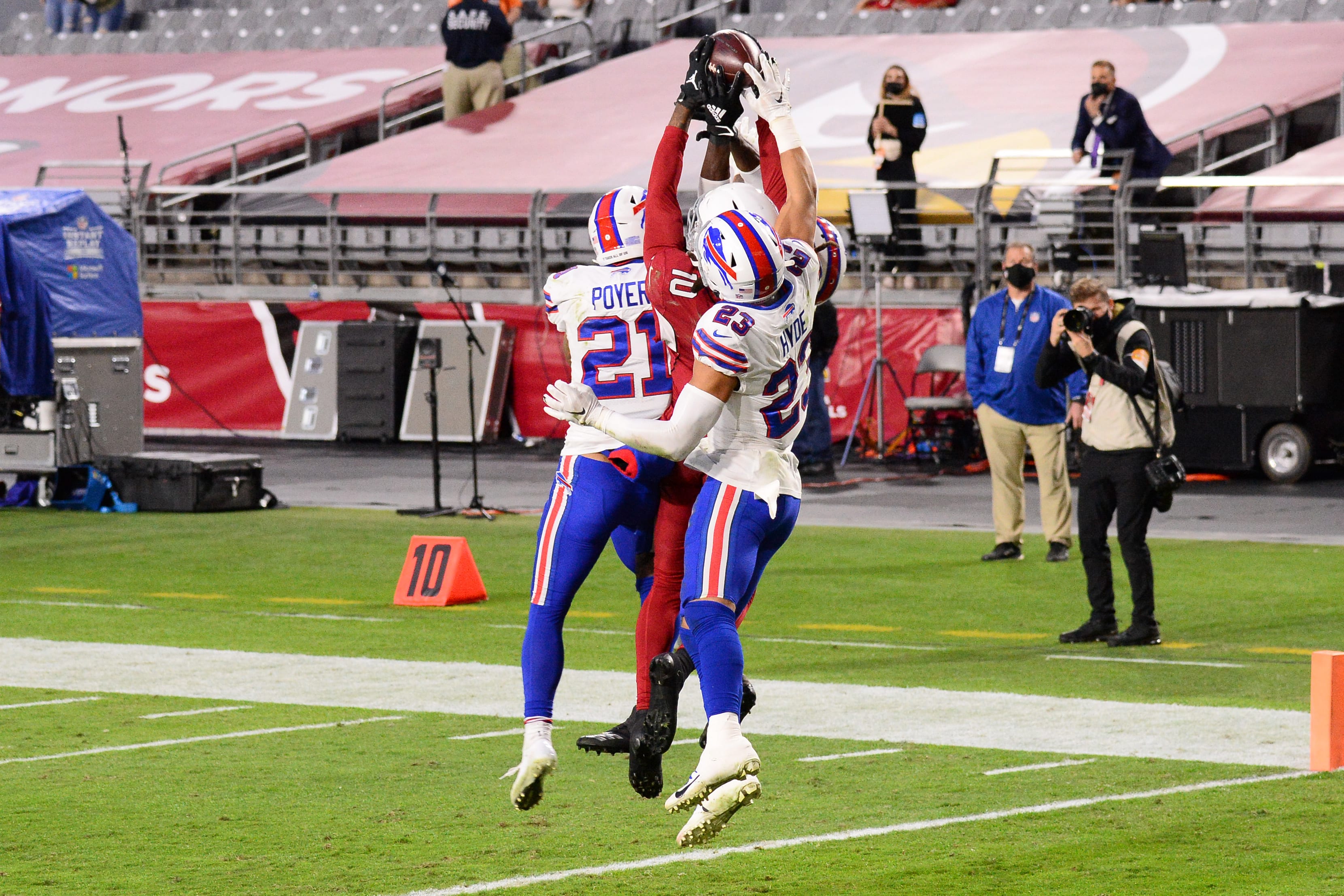
For Buffalo, this means a return to Glendale, the site of the more heartbreaking losses in recent franchise history. The Bills nearly stole a win from the hosting Cardinals on November 15 but were done in by Kyler’s Murray’s 43-yard miracle toss to DeAndre Hopkins that gave the home team a 32-30 victory.
The Bills (8-3) are no strangers to scheduling changes enforced by COVID-19. Their Week 5 matchup against the Tennessee Titans was moved from Sunday to Tuesday after an outbreak in the latter organization. It was the first NFL game played on a Tuesday since December 2010, when the threat of inclement winter weather forced a game between Philadelphia and Minnesota to be moved. Buffalo’s next game, originally scheduled for the ensuing Thursday night in Orchard Park against Kansas City, was likewise adjusted, moved to the following Monday night. The Bills lost both games.
This will mark Buffalo’s first appearance on Monday night since October 2018, when they hosted New England.
Further adjustments to the NFL schedule involved moving games away from certain days. The long-delayed matchup between the Pittsburgh Steelers and Baltimore Ravens was moved for a third time, as the game originally scheduled for Thanksgiving night was first pushed to Sunday afternoon and later this Tuesday night. But a new shift, announced on Monday, will stage the NFL’s first Wednesday game since 2012 (3:40 p.m. ET, NBC), when the Democratic National Convention forced the season opener between the New York Giants and Dallas Cowboys to be played a day before its traditional Thursday spot.
As a result of those delays, both Pittsburgh and Baltimore’s Week 13 games have already been moved. The Steelers will now play Washington next Monday at 5 p.m. ET, while the Ravens will play a day later (8:05 p.m. ET, Fox/NFL Network) in what was originally a Thursday night tilt against the Dallas Cowboys.
The Buffalo Bills tight end and New Jersey native was diagnosed with myocarditis, a condition sometimes associated with COVID-19.
TE Tommy Sweeney will be out for remainder of season after a cardiologist discovered he has myocarditis, a condition connected to COVID-19. #BillsMafiapic.twitter.com/GRokB9lmk6
The Buffalo Bills have announced that tight end Tommy Sweeney will miss the remainder of the season after being diagnosed with myocarditis, a heart condition associated with COVID-19.
Sweeney, in the midst of his second season with the Bills, was placed on the COVID-19 reserve list on October 24 after he was deemed a close contact when fellow tight end Dawson Knox tested positive for the virus. He had yet to appear in a 2020 game due to a foot injury prior to Knox’s positive test. The Ramsey, NJ native joined the Bills as a seventh-round draft pick out of Boston College last season and earned 114 yards on eight receptions in his debut campaign.
“I saw him today, he’s in good spirits,” Bills head coach Sean McDermott said, per The Buffalo News. “He’s had a rough year, with the injury, COVID, and residual piece of the COVID, unfortunately. We know he’s a good football player and a guy that we believe in and can’t wait to get him back on the field when he can in the offseason.”
According to WebMD, myocarditis is “inflammation of the heart muscle (myocardium)”. Symptoms include shortness of breath, abnormal heartbeat, light-headedness, and joint pain. Though the full extent of its direct association is unknown, the rare viral disease has been found in COVID-19 patients, even those who have recovered. Boston Red Sox pitcher Eduardo Rodriguez was diagnosed with myocarditis after a bout with coronavirus in July, who sat out the shortened 2020 MLB season to recover.
The Bills (7-3) are set to return to action this weekend following their bye week. They’ll host the Los Angeles Chargers at home on Sunday afternoon (1 p.m. ET, CBS).
In a year of chaos, NASCAR’s stability and adaptation brought hope and joy to the nation. Maybe we can all take a lesson from the circuit.
Enough has been written about American chaos, lunacy, childishness, violence, depravity, callousness, and heartbreak in the year 2020.
Yet, with circa 50 days remaining in this year of struggle and reckoning, there’s still time to come out clean on the other side. Through perseverance, talent, and faith, the American people still have time to emerge with a sense of betterment, if only on a personal level. The country has struggled at times to live up to the principles it was founded on, those of freedom and opportunity. But there are still individual cases throughout the land that showcase these American ideals. After all, it’s more often than not no one in the White House that makes America great…it’s We the People.
Cruel as life can be, it does have the decency to imitate the art of these ideals and virtues, often doing so through the canvas of sports. After all, that’s what made the 2020 NASCAR season so intriguing and a beacon of hope in a chaotic landscape.
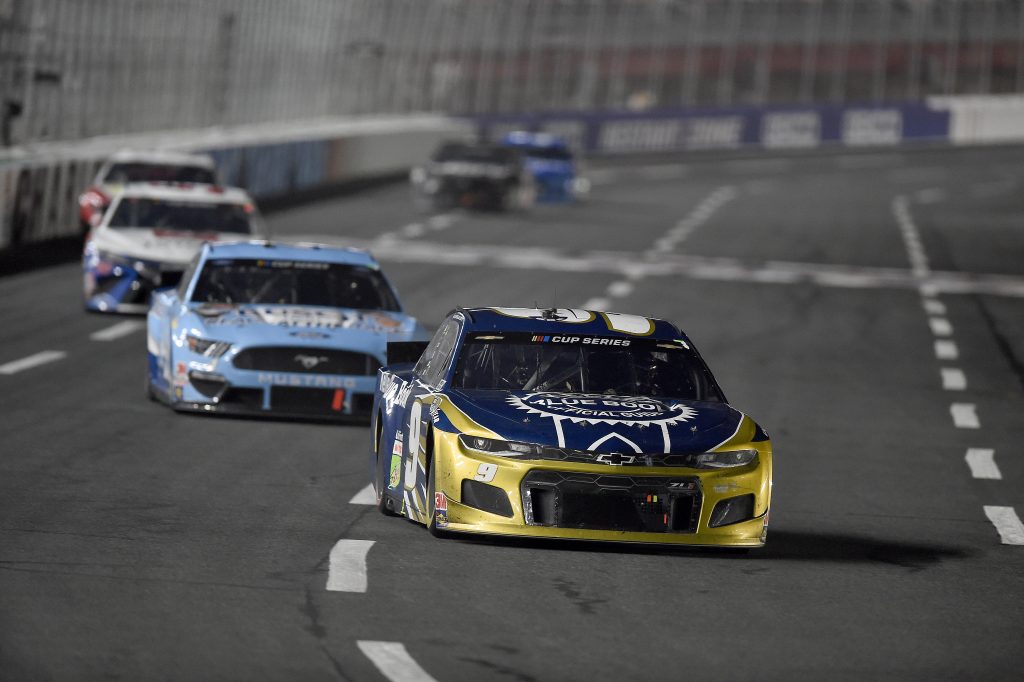
Last Sunday marked the end of the 2020 circuit, the proceedings wrapping with Chase Elliott, the modern face of NASCAR, hoisting the Bill France Cup in the deserts just outside of Phoenix to commemorate his first championship title in the premier Cup Series. Elliott’s dominance of the 500-mile finale made the final laps of the campaign a tad anticlimactic…his No. 9 Hendrick Motorsports Chevrolet beating Brad Keselowski by a 2.74-second margin…but everything else was consistent with a storybook ending.
The Season Finale 500, NASCAR’s championship race, was held on its originally scheduled date at its originally scheduled location. Even a few loyal, socially distanced fans were welcomed into the facility to witness Elliott’s dominance. The event was the 36th points event of the Cup Series season…no different from the number attached to a full schedule in a year unhindered by masks and six feet.
“The year has been, in short, I would say extraordinary, although I could probably use 15 or 20 other words to try to get to something,” NASCAR President Steve Phelps said prior to the Cup finale at Phoenix. “It’s just unprecedented in the history of our country, in the history of sports, and certainly in the history of our sport. I would suggest this is the single most difficult year that we’ve faced as a sport.”
“But through it all this industry…I believe this industry does adversity better than any sport.If you think about it, we’re at a competitive disadvantage. We don’t own ourselves.We’re not franchised, right?We have independent contractors who come to race as one. What we have done during this global pandemic is I think nothing short of remarkable.We can’t do what we did as a sport without coming together.”
(Photo by Streeter Lecka/Getty Images)
The Return
NASCAR was not immune to the world getting turned upside down at the onset of the ongoing health crisis. The circuit ran four races before shutdown and quarantine protocols across the country forced them to take an indefinite break after, ironically, the first race at Phoenix Raceway, the FanShield 500 on March 8. Working with their business partners and local governments, the series was able to negotiate a return on May 17, with proceedings moving to a doubleheader at the historic Darlington Raceway.
Like the rest of the country, drivers and crews had to make do with the temporary new surroundings. One of the most accessible sports from a spectator standpoint endured empty stands and empty garages. The typical hustle and bustle of fans enjoying not just a day, but a whole weekend, at the track, and the colorful and lively sponsor hospitality tents had all vanished.
NASCAR was stripped down to almost bare essentials, with a weekend’s work confined to mere hours after practice and qualifying were wiped out. With the starting lineup determined by random order and later a mathematical formula that prioritized those ahead in the standings, drivers essentially went from their streetcars to their racecars on the day of the event. Further draining perhaps emerged from the potential of running three races over the span of seven days, as weekday events were added to the schedule in an effort to get the full docket in.
Other efforts to not only complete every race but include the variety of different tracks that NASCAR has become known for were made as well. With road course events at Sonoma and New York State’s Watkins Glen International unable to be salvaged, the Cup Series moved their proceedings to a strange land in familiar territory: the road course at Daytona International Speedway. No NASCAR career is complete without running Daytona at least once, but the road course was unchartered ground. Yet, the sport pushed through, with Elliott winning a relatively clean maiden race back in August.
“If you told us we were going to a road course and never have practice and we’re just going to line up and race, and you told us that in January or February, we’d think you were nuts, that would never happen,” Joey Logano, championship finalist and the driver of the No. 22 Team Penske Ford, said of 2020. “We have to have a test session, we have to have a bunch of practice. It’s not possible. (But) we did it, and it was a great race, right, down in Daytona.”
As American sports adjusted to new, makeshift surroundings, NASCAR was able to provide a sense of normalcy to the landscape. While motorsports perhaps provide the best opportunity to social distance, they’re impossible to stage in a bubble that worked so well for the NHL, NBA, WNBA, NWSL, and several others. The health crisis would only add further chaos to the situation, with the necessary travel only increasing the potential for positive COVID-19 tests.
But NASCAR was able to navigate the situation fairly well, as drivers and crews alike adhered to protocols. From a participants’ standpoint, only two drivers (Jimmie Johnson and Austin Dillon) missed time due to a positive test and each was cleared to return to the track after one absence. With the exception of the ongoing NFL season, NASCAR is the only major North American sport that managed to complete a full-time, regularly scheduled season. Despite some venue shifts, every one of the 36 Cup Series races was completed.
“I would suggest that our sport did as well or better than other sports did with respect to how our protocols worked with our competitors. We have a significant number of competitors, not just our drivers but our crews, our officials, the safety workers,” Phelps said of the safety and health protocols. “When we shut down heading into Atlanta, we had no idea when we were going to get back to racing.It was our goal, and a stated goal, that we were going to run all races.Tomorrow when we crown a champion in our Cup Series, we will have run all our races.We did it through ways that frankly probably we didn’t think we could do, right? A bunch of midweek races. Three doubleheaders.No practice and qualifying. Things that were kind of significant in bedrock that we do, right?You come to the racetrack, you’re here for three days, you practice, you qualify, you’re on your way, right?”
“For us to be the first sport back without fans initially on May 17 in Darlington, to the first sport back with fans, I think it’s an extraordinary achievement.”
Mandatory Credit: Jasen Vinlove-USA TODAY Sports
The Champion
Even though he’s set to turn merely 25 in two weeks, Chase Elliott has perhaps spent more years around a racetrack than some drivers have been alive. That’s what happens when your dad is Awesome Bill From Dawsonville. In layman’s terms, Bill Elliott was a NASCAR driver hailing from Dawsonville, GA, and an accomplished racer in his own right. Bill Elliott won 44 Cup Series races, the 1988 championship, and 16 Most Popular Driver Awards.
NASCAR royalty appears to follow the younger Elliott wherever he goes. In addition to his parental ties, a good portion of Elliott’s NASCAR endeavors have come under the Hendrick Motorsports banner. Owned by Rick Hendrick, the team is more or less NASCAR’s answer to the Yankees, boasting 17 championships at the primary national levels, including 13 in Cup. Elliott also ran a pair of seasons in the NASCAR Nationwide/Xfinity Series with Dale Earnhardt Jr.’s team (winning the 2014 title) before making his transition to the premier league. When the time came, Elliott originally took over the No. 24 Chevrolet branding that the legendary Jeff Gordon left behind upon his retirement. That team made itself over to represent the No. 9 after William Byron earned a promotion of his own. Elliott had run that numeral in the minors and his father also ran it for the majority of his full-time Cup Series career. There, he has spent the past five seasons under the tutelage of teammate Jimmie Johnson, one of two seven-time Cup champions (alongside Richard Petty and Dale Earnhardt). In the commemoration of Johnson’s retirement from fulltime-time, Elliott’s “throwback” paint scheme at Darlington’s Labor Day weekend resembled the car the No. 48 drove to the 2009 title. His Phoenix vehicle bore a No. 9 dyed in the color of bright yellow digits that Johnson repped for nearly two decades.
But it’s almost a shame that Elliott’s story can’t be told without such prominent names attached to it, even if his support system was partly why his story can be so vital on a national landscape. The Dawsonville native and die-hard Atlanta Braves fan has built a sizable racing resume throughout his early 20s. His name already peppers the NASCAR record books as the youngest winner at several tracks on the circuit. He’s developed a reputation as a road course warrior, winning the last four races at such tracks (a mark bested only by Gordon). At NASCAR’s de facto victory lap at Bristol Motor Speedway’s All-Star Race in July (run in front of 30,000 fans), Elliott earned the literal million-dollar victory with a dominant effort. He’s even catching up with his father and former boss in Most Popular Driver Awards, earning the last two after Earnhardt Jr.’s retirement ended his reign at 15.
Yet, claims of nepotism, the belief that Elliott wouldn’t have the ride he had without his name persisted. Critics pointed no further than his lack of success in the NASCAR postseason’s semifinal segment, a Round of 8 curse that manifested itself through bad luck and factors that were often beyond his control. That trend showed early at several points this season. Late contact with Kyle Busch denied him a chance at victory at the Darlington reopener. An ill-advised decision to come to pit road during a late caution cost him victory at the 600-mile crown jewel at Charlotte. The Johnson-inspired car failed to capture victory at the late summer return to Darlington, making contact with Martin Truex Jr. in a furious battle for the lead. But Elliott still managed to create a strong season to the tune of wins at the Daytona/Charlotte hybrid tracks and another Charlotte win days after the Coca-Cola 600 miscue.
But the curse…the swing of eight, one could call it…nearly manifested itself yet again in the dying stages of the season. A pit road mishap in the middle event of the three-race segment at Texas Motor Speedway relegated him to a 20th-place finish at the worse possible time. It more or less put Elliott in a must-win situation, the standings too far spaced to hope to make it in through points.
Elliott would then go on to dominate the penultimate race of the season at Martinsville Speedway, a short track known for its chaos. But disaster nearly manifested with less than 100 laps to go. He was able to star as the first car with four fresh tires to leave, but NASCAR was set to send him to the rear of the field because they determined jackman T.J. Semke left the wall too early, necessitating a penalty. The No. 9 team would vehemently argue the penalty, reasoning that Semke made it back to the wall in time to escape without a foul. NASCAR reviewed the incident and determined that was indeed the case. Elliott got back on track and passed Truex Jr. to capture the necessary victory.
“This is a moment that we haven’t experienced together,” Elliott said after that race. “You just don’t know those emotions until you go through it, are able to experience it,” Elliott said after the Martinsville victory. “We obviously all put a lot of effort in to try to do our jobs to the best of our ability. T.J. made a mistake. He was heads up enough to go back and fix it, not to have to go to the back of the field. If he hadn’t have done that, I don’t think we’d have been able to win. There just wasn’t enough time left. That’s super heads up.”
“It absolutely is a team sport,” he continued. “We can’t do it on our own. I can’t do it by myself. No one on our team can do it alone. We recognize that. Feel like we have a great group, a group that’s capable of winning. I thought we showed that and proved that tonight.”
The curse, it appeared, felt like it hadn’t fully had its way with Elliott just yet, though. Going into the Phoenix finale, a failure of prerace inspection sent Elliott to the rear of the field to start the race. This time, there was no arguing the penalty, and Elliott indeed had to move things back to the rear of the field.
Between his youth and prerace misfortune, Elliott had a built-in excuse for emerging from his first final four without a trophy. Instead, the driver of the No. 9 rolled up his sleeves and smiled…far more worried about his losing the pit box closest to the exit than having no one in his rearview mirror at the start of the race.
“Starting position is great and all, whatever, I feel like from that standpoint, but that pit pick is huge,” Elliott remarked. “That starting position stays with you. It could potentially be done when you leave Turn 2, but that pit pick stays with you until the race is over.”
“The first thing that really kind of stuck in my head was, Dang, are we going to lose that, too? And once I realized we didn’t, I’m like, Okay, if we have our car good and our balance is right, who cares if you start at the back for the race? 312 laps, you know. That’s no excuse to not get the job done if your car is good.”
One thing that NASCAR could not check for was extra nuggets of inspiration. Elliott said in the Phoenix lead-up that he didn’t truly believe in the concept of bulletin board material. Thus, being Chevrolet’s first championship finalist in four seasons didn’t expand the hypothetical speedometer on the No. 9 machine.
But Elliott did say a special boost was waiting for him before lowered his window net before the green flag: a message from Johnson, whose seventh and final title came in 2016, when he likewise had to go the length of the field to earn a championship. Shortly after Elliott ran and led the 312th and final lap of the race, he and Johnson met on track for a high-five from their cars, unable to remember what they were saying due to the noise generated by the pure ecstasy of victory and revving of their respective Hendrick engines. It wasn’t the first time Elliott and Johnson celebrated a debut victory together. After Elliott’s first Cup win at the 2018 Watkins Glen even came through careful fuel management, Johnson’s No. 48 pushed the bone-dry No. 9 back to the front of the grandstands at the start/finish, where the celebration could officially begin.
This time, it wasn’t a push that kept the celebration rolling…it was a hug. Elliott, Johnson, and Hendrick shared a group hug the second the former pair emerged from their cars. With a fifth-place finish, Johnson was the best finisher amongst the non-championship contenders…an honor that was enough for his daughter Evie to tell him that he was also “a winner”. The familial themes were the perfect way to come full circle. One of the most recognizable images of sports in 2020 remains the shot of Ryan Newman being led out of a hospital by his daughters Brooklyn and Ashlyn mere days after the driver of the No. 6 Roush Fenway Racing Ford endured a horrifying, airborne accident at the end of the Daytona 500.
“The last text message I saw before the race was from Jimmie. And he said, The road to the top…I forget what he said,” Elliott said with a laugh about his final steps into the championship car. “He said something about the road to the top can have some twists in it. I hate you guys are having to start in the back, but you can get it done. That was the last thing I saw before the race.”
“He’s a hero of mine. I think he’ll go down as the greatest to ever do this mess. For that type of guy to be reaching out lending support and genuinely wanting you to do good, hell, what else can you ask for?”
A championship American endeavor completed through teamwork and perseverance? That’s the type of story that everyone in this nation, civilian and politician alike, needs to read in these trying times.
(Photo by Jared C. Tilton/Getty Images)
The Hope
One can fully admit that sports fandom is not a matter of life or death, and they rightfully took a backseat on several occasions this year. Yet, the role they can have on one’s psyche cannot be denied…even if it comes through something as simple as letting the folks at home know what day it is.
For some, the reality of the pandemic truly took hold when, one-by-one, sports leagues on both the professional and amateur levels began to shut down. NASCAR held on longer than some of their counterparts, but eventually hit pause hours before a race weekend at Atlanta Motor Speedway was due to begin. Like many organizations, the shutdowns across the country stifled progress in a hopeful outlook. One of the biggest effects of the pause was the fact that NASCAR had to push back the debut of the “Next Gen” racecar by a year, as testing had to be shelved in the wake of lockdowns. The new car is now set to debut at the 2022 Daytona 500.
“What I would say is that on March 8th we were a sport that was coming back,” Phelps noted in reflection during his pre-race statements. “Our ratings had stabilized last year. Our attendance was going in the correct direction.”
After two weeks of lingering, waiting, NASCAR was the first sport to return to television screens…literally turning to television screens of sorts to get things rolling. On March 22, drivers took the virtual confines of Homestead-Miami Speedway, running a shortened version of the event that was meant to be held that weekend on the iRacing platform.
iRacing had long held a role in NASCAR. Some drivers partook in the program for fun, others opted to use it for testing purposes. This time, it was united in a cause of hope. A new, exciting addition to the NASCAR circuit was well-received by audiences. Through the platform, fans got to see the objects of their modern adoration do battle with iRacing virtuosos and legends of the past who came out of retirement to partake (i.e. Dale Earnhardt Jr. and Bobby Labonte). The event at Homestead proved so popular that it became a new, temporary circuit of its own, the eNASCAR iRacing Pro Invitational Series. Lower-budget drivers, who previously accumulated strong hours on the platform got their time to shine. For example, Timmy Hill, driver of the No. 66 Toyota for microbudget squad MBM Motorsports, went to victory lane at a pixelated Texas with an expert bump-and-run on Byron. The series ended with a special event at a recreation of North Wilkesboro Speedway, a North Carolina short track that has fallen into disrepair since running its last NASCAR event in 1996.
Through these races, called by Fox’s lead broadcast team of Gordon and Mike Joy with a perfect blend of seriousness and snark, NASCAR was able to not only stay relevant and provide new content while other sports bided their time through replays of classic events, but to provide hope and assurance to their fans and sponsors. As they enjoyed the virtual proceedings, fans were allowed to sit back, relax, and pretend things were normal again, if only for a short while.
“What a wonderful thing that landed in a world of NASCAR and motorsports’ lap. It is almost like it was built and prepared for this pandemic,” Clint Bowyer said during the summer. “Without it, I don’t honestly know that NASCAR survives and are able to turn the switch back on after we did. Bridging that gap and keeping our sponsors in the limelight under ratings that are competitive with any sport was phenomenal for all of us in the world of motorsports and in particular NASCAR.”
Bowyer partook in the iRacing events and helped Joy and Gordon called the races on Fox. Formerly the driver of the No. 14 Stewart-Haas Racing Ford, Bowyer announced late in the season that he would step away from racing to join the Fox Sports booth full-time. One thing that will always stand to him will be just how much the sport cares and provides for their fans.
“I enjoy it. I enjoy this sport. I love this sport. I am proud of this sport and proud to be a part of this sport,” Bowyer said. “It has always been fun for me over the years to sell this sport to the fans or whatever the case may be. Having that access to be able to reach a fan in a different way, over the years I have just gone out to the infield and interacted with fans and got to know them and tell our story.”
That love culminated on the weekend of May 17, when conditions were declared safe, though things were a bit different when resumption weekend began at Darlington. The weekend traditions of qualifying, practice, were eliminated. But it assured that there would be no asterisk whatsoever next to a championship title. In fact, one could argue that the lack of preparation, the aforementioned, immediate transition from streetcar to racecar, makes a 2020 championship even more special.
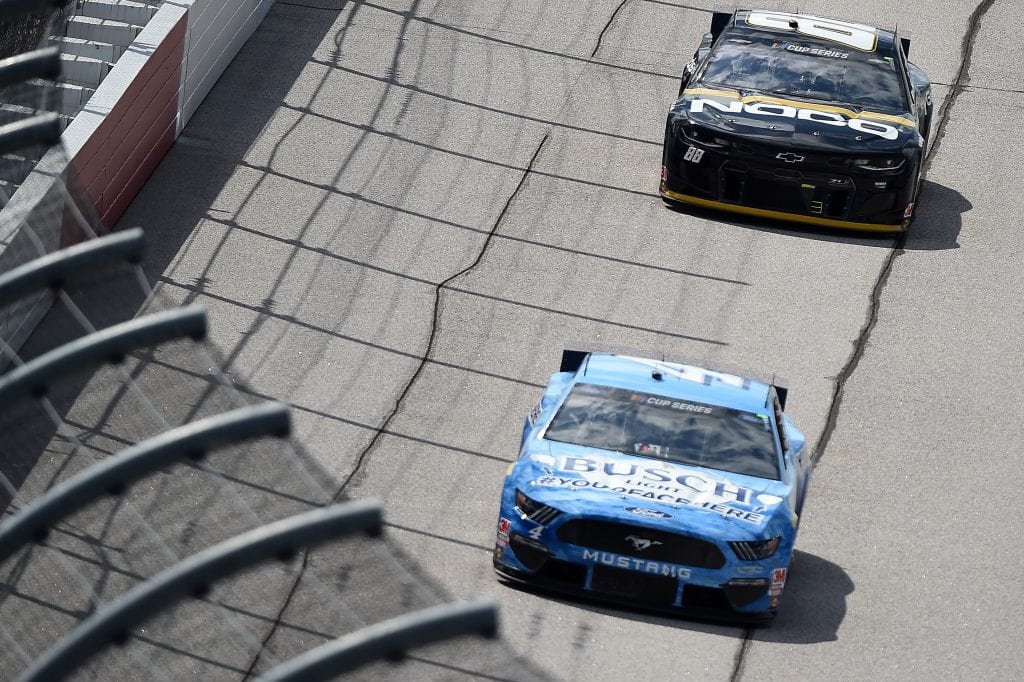
It’s partly why Kevin Harvick’s season will be long-remembered, even with no championship waiting at the end. The driver of the No. 4 Stewart-Haas Racing Ford won an astonishing nine races, dominating the circuit until hard luck cut his championship trek short in the Round of 8. It may not have ended with a trophy hoist in victory lane, but nonetheless helped Harvick solidify himself as one of the more dominant drivers in the sport’s history.
(Photo by Chris Graythen/Getty Images)
The Unity
The current health crisis has done major damage across the country for months, but another disaster has raged on for centuries: that of systemic racism. America has accomplished much since its founding, developing into a land of prosperity and opportunity, but our country’s promise of liberty and justice for all has gone by the wayside far, far too often.
Ideally, sports could be a realm where real world issues can truly be set aside, but such a luxury has been rendered no longer tolerable in 2020, as ignoring the ongoing reckoning with the dark portions of the past would be to deny the humanity of the athletes that entertain us. As professional and amateur sports alike have made their way back from their respective hiatuses, the biggest names have used their First Amendment right of free speech to advocate for change.
As the first sports to return to action eyes turned to NASCAR in the process, as no one could deny its status as a predominantly white sport. Its roots in the Southeast have caused a vocal minority of naive and immature critics to label the entire fanbase as racist and anti-intellectual. But problems with the sport’s diversity couldn’t be ignored, not only in the scale of the national picture but the narrower personal frame as well. Doing so would’ve been especially difficult when Kyle Larson, one of the sport’s up-and-coming talents, used a racist slur during an iRacing event streamed on Twitch. Larson was removed from his high-profile ride at Chip Ganassi Racing after the incident, replaced by retired Cup champion Matt Kenseth.
Larson’s firing was justified, but further incidents of injustice across the nation amplified voices of protestors, turning the attention to NASCAR, one of the few forms of recreation operating. It perhaps would’ve been easy for the circuit to sweep things under the rug, hope for the best, and keep things relegated to racetrack matters. Instead, NASCAR addressed things head-on, making their statement at a moment where most eyes would be watching: right before the start of the race.
Prior to the start of the rescheduled Atlanta event on June 7, Phelps paused the 40 starters at the start/finish line and addressed NASCAR..and the nation…directly.
“Our country is in pain and people are justifiably angry, demanding to be heard,” Phelps said in a radio message played over the race communication networks and the national TV broadcast. “The black community and all people of color have suffered in our country, and it has taken far too long for us to hear their demands for change. Our sport must do better. Our country must do better.”
“The time is now to listen, to understand, and to stand against racism and racial injustice.”
NASCAR’s stand was immediately put to the test. Three days after Phelps’ announcement, and hours before a weekday event at Martinsville Speedway, the governing body announced that displays of the Confederate battle flag would no longer be welcome at sanctioned events. The series’ southern roots led to close association with such a flag and many of its flyers claimed it was simply a display of southern pride. NASCAR had previously tried to distance itself from the display by offering a trade-in program that encouraged fans to display an American flag instead.
But this outright ban made it clear that a flag that stood for preserving the institution of slavery and literally cut itself off from the ideals and territory of the United States of America was no longer welcome at their events. With rare exception, drivers understood the flag’s departure.
“For some people, it has different meanings,” Tyler Reddick, rookie drivers of the No. 8 Richard Childress Racing Chevrolet, acknowledged. “But for those that were affected by it and generations of families that have been through hardships, slavery, all sorts of things, racism, I just don’t feel like there’s a place for it. So, I’m glad to see NASCAR put their foot down and like ‘alright, we didn’t really like it at the track, but we’re not allowing it anymore’. It’s well beyond time and it’s kind of crazy to even think, whether its statues or whatever it is around our country, that we’ve kept these things up as long as we have, considering how much negative meaning that a lot of those statues and things we have around our country meant to people that have been affected by it the most.”
“We need to not allow that banner to be at the racetrack, personally. I don’t really care how you can justify what it means,” Corey LaJoie said in an exclusive interview with ESM. “I think, if anything, you can justify it as being insensitive to people it offends. This might not be a practical analogy, but if my brother is definitely allergic to peanuts and I love peanuts, I’m not going to eat peanuts in front of him, right? Just because it has the possibility to hurt him, physically. If there’s something that I consciously do to offend somebody emotionally, I wouldn’t choose to do that, even if I enjoy eating peanuts.”
“When it comes to supporting our sport, we need to have everybody feel welcome,” the driver of the No. 32 Go Fas Racing Ford. “No one should feel offended by anything, no signage, no opinions by anybody. Really, we’re one community trying to entertain people and that’s what we love and what show up 36 weekends a year to do. We don’t want to exclude anybody, we want everybody to feel welcome coming to the NASCAR track.”
The ultimate display, one of the most inspiring, unifying displays in all of sports came at one of the sport’s most prominent, most beloved Southern hubs: Talladega Superspeedway.
Talladega is known for its tight racing, rising tempers, and multi-car get-togethers known as “The Big One”. It seemed only appropriate that the first of two events at the longest track on the circuit came on June 21…the hottest and longest day of the year. But racing activities were overshadowed by an apparent incident, one where a rope tied into a noose was discovered in the garage stall of Bubba Wallace, the only African-American driver on the Cup Series circuit. NASCAR immediately called an investigation in cooperation with the FBI, who eventually determined that no hate crime was committed.
But there mere thought of a threat brought the forces of NASCAR unity and brotherhood out in full force.
Prior to the start of the GEICO 500, moved to a Monday, drivers and crews alike walked alongside Wallace’s No. 43 Richard Petty Motorsports Chevrolet, pushing to the front of the field and stood alongside him during the national anthem and invocation. After prerace ceremonies were completed, each of Wallace’s competitors embraced him individually.
Alex Bowman was one of those drivers. He and Bowman had their prior shares of on-track confrontations, namely during last fall’s tilt at Charlotte Motor Speedway’s road course. Their battle came to a head on pit road when Wallace dumped a bottle of water on an exhausted Bowman at the end of the race.
But when the time came for the series to rally around Wallace, Bowman showed no hesitation whatsoever. He said that such unity was vital in the day and also praised Wallace for his own comments calling for justice and action against systemic racism.”
“I think there’s no secret, we’re not best friends, right? We’ve had our fair share of run-ins and the on-track stuff is just going to happen – tempers are going to flare and if you run into the same guy a couple of weeks in a row here and there, it’s not going to go great for your relationship,” the driver of the No. 88 Hendrick Motorsports Chevrolet said. “But that’s as a racecar driver and that’s on the race track. As a human being, I have a big appreciation for him pushing us all to be better, speaking up and us do the same. It really comes down to, on the race track, we’re probably not going to be friends. But as a person, I appreciate what he’s doing and just wanted to show my support for him.”
True to NASCAR form, the Talladega unity was capped by an incredible show, one that came down to the wire. Ryan Blaney took the race by a .007-second margin at the finish line over Rickey Stenhouse Jr., as the field went six lanes wide in a final push to the finish.
Blaney remains a close friend of Wallace. The two have been racing together since they were 10 years old and are regularly seen commiserating during rain delays through video games. In his postrace statements from Talladega, Blaney made it clear that those who wish Wallace harm would be dealt with swiftly…the display at Talladega served as a de facto reminder.
“I think it’s great that everyone rose up, Bubba included, and really came together,” Blaney said of the prerace demonstration. “I don’t want it to be remembered as a terrible day or a bad day in NASCAR. I want it to be remembered as there was an incident and we all overcame it together, showed that we were not going to take it anymore.”
“You may not like each other all the time, may tick each other off on the racetrack from time to time. (But) at the end of the day, we’re going to support each other. What really got me was when we got Bubba’s car to the front there, he had to take a little bit to pause and compose himself because it was a very emotional moment for him. I think it was emotional for him because everyone was supporting him. It’s just something different that I couldn’t personally be a part of because I’ve never been in Bubba’s position, but I’m going to support him the best I can.”
Wallace remained an active voice in the calls for change. His No. 43 scheme at Martinsville bore a message of unity as well as the “#BlackLivesMatter” slogan. The winner of six races at the NASCAR Truck Series level begins a new opportunity next season, as he will headline the newly formed 23XI Racing team under the watch of Cup Series star Denny Hamlin and NBA legend Michael Jordan, set to drive a Toyota bearing Jordan’s iconic No. 23.
He acknowledges that while the steps NASCAR has taken have been inspiring, more must be on the horizon.
“I think we just have to get out in our communities and we’ve created a group of us to be leadership at NASCAR as some key drivers to be a part of how we can put action to our words that we’ve been speaking and spreading the gospel,” Wallace said over the summer, acknowledging things might be hard with the confined settings of the pandemic. “Let’s focus on how we can continue to push the message of compassion and understanding and let’s help fight the good fight in what’s going on in the world today. And let’s get new fans out to the race track and encourage our fanbase now to welcome them with open arms and show them a good time. I think that’s one important piece that we can focus on right now.”
For his part, Phelps said that NASCAR is ready to dip further into social issues. Phelps acknowledged that he doesn’t see it as NASCAR getting involved in political matters…rather a human rights battle.
“What we do from a social justice standpoint moving forward really to me is about…human decency,” Phelps said. “We want to make sure that people want to come to our facilities.We want to make sure they want to participate in this sport on television, radio, digitally, and socially.We want them to feel part of this community.It’s a fantastic community, it really is.”
“I know when I go to a racetrack and I see people who are camping next to each other who are total strangers, that invite each other for a beer, do you want a hot dog, brat, whatever it is, that’s what our community is about.We want to make sure that everyone feels welcome when they come to those facilities.”
(Photo by Jared C. Tilton/Getty Images)
The Nation
Calling upon NASCAR to solve the problems of a nation whose problems have not been subsided with the end of a bitter election process. Even things in their own house aren’t fully settled: some fans refuse to surrender the Confederate flag hill. Truck Series driver Ray Ciccarelli announced plans to leave the circuit, his reasons stemming from the ban.
But the lessons this campaign, the most unusual season in the history of NASCAR, have taught us can truly allow us to begin the healing process.
The 2020 NASCAR season featured so much from a standpoint of perseverance and unity…such a concept ironically coming in the sport where it’s the easiest to social distance. For the record, NASCAR did that pretty well too with the low number of medical absences.
A driver that could’ve well skated by with the sheer number of legendary names attached to his career and dealt with bad luck conquered those weights in tremendous fashion. Perseverance and love came through several further forms of personal triumph: Newman’s relieving walk and Chase Briscoe’s Xfinity Series win at Darlington shortly after being told his wife Marissa suffered a miscarriage stood out as well. After his apology, Larson took the next, bigger step through truly educating himself and working toward a better understanding of the consequences and effects of his slur. It was enough to earn a new full-time ride with the defending champion team of Hendrick Motorsports, driving their resurrected No. 5 Chevrolet. Wallace plans to continue to use his voice to amplify cases of change and fighting injustice.
NASCAR took a dire situation and provided a grieving national hope and guidance.
It’s a shame that some refuse to acknowledge the lessons brought forward. But, much like a car fighting for its lap back or navigating through a Big One at Talladega…they’re not going to stop on this drive.
“I would say the biggest thing that I have learned throughout all of this is that when you think something is impossible or are too scared to try, you should try it,” Logano said of the biggest lesson he’ll take away from this season. “Because it is usually not as bad as you make it out to be in your mind. Case in point, a few times this year in this sport. Who would have ever thought that we would go to a road course that we have never raced at before and just line up and race without practice? Are you kidding me? If you say that in January or February this year we would have said you were nuts and we would never ever do that. We have been forced to do things like that.”
“That is just one case in our sport. Imagine all the things that every company is going through right now. Trying to find ways to become profitable again, or at least cover their costs. You have to be creative, you have to think outside the box and you can’t be scared of trying anything. I think that alone is probably the biggest thing I have learned that I can take forward with me for years to come.”
It’s not a full-on solution…but these lessons and more could well be part of the pit stop our country sorely needs.
The Buffalo Bills announced on Saturday that cornerback Josh Norman has tested positive for COVID-19. Norman will thus not play in Buffalo’s Sunday visit to Glendale against the Arizona Cardinals (4:05 p.m. ET, Fox). Three players who were determined to be in close contact will also be held from the trip, as will defensive assistant coach Leonard Johnson. Among the missing players are CB Levi Wallace, S Dean Marlowe, and TE Tyler Kroft.
Norman was expected to make his return to the Buffalo lineup after missing three games to a hamstring injury. The absence of he and Wallace comes as the Bills (7-2) take on an Arizona team that tops the NFL in total offense (422 yards per game). Buffalo’s three primarily cornerbacks (Norman, Wallace, and Tre’Davious White) have been communally active for only a single game this season. Though listed second in their respective depth chart rows, Kroft and Marlowe have made strong contributions to the Bills’ success. Kroft leads all Buffalo tight ends with 119 receiving yards and is tied for the overall team lead with three touchdown receptions alongside Gabriel Davis and Stefon Diggs. Marlowe is perhaps best known for recovering the crucial fumble that gave the Bills a 24-21 victory over New England two weeks ago.
According to Josina Anderson, Norman took four nasal COVID-19 tests, with half of them being positive/negative. Anderson remarked that Norman “sounded strong” when they spoke.
“It is what it is,” Norman said, per Anderson. “I’m handling it. I’ll be fine.”
In the wake of the absences, Buffalo called up the following members of their practice squad…
LB Darron Lee-Best known as a former first-round pick of the New York Jets, Lee earned a Super Bowl ring through the Kansas City Chiefs’ trek to the title last season. He was signed to the Bills’ practice squad on November 2.
CB Daryl Worley-Worley inked a one-year, $3 million deal with the Dallas Cowboys last offseason, but was released after their slow start and failing to find a trading partner. He earned 14 tackles over seven games in Texas, starting four games.
WR Jake Kumerow-Kumerow was part of the Green Bay Packers’ final training camp cuts in September, but he was signed by the Bills three days after his release to join their practice squad. Kumerow previously partook in last Sunday’s Buffalo win over Seattle, earning 16 snaps.
S Josh Thomas-An undrafted free agent out of Appalachian State, Thomas has played in one game with the Bills thus far, earning a tackle in their 24-21 win over New England in Week 8.
CB Dane Jackson-The Pittsburgh alum was the final pick of the Bills’ draft proceedings in April (239th overall). He earned second-team All-ACC honors last season and forced four fumbles a year prior in his junior campaign. Jackson previously stepped up for an injured Norman against the New York Jets in October and earned his first career interception.
With less than three weeks before training camp begins, Covid-19 has struck the New York Knicks.
Three employees of the Knicks organization tested positive for the coronavirus, the team’s PR announced on Tuesday evening. The Knicks added they are all asymptomatic and are now under quarantine.
To avoid a further outbreak, the Madison Square Garden Training Center has been temporarily shut down for thorough cleaning. The training facility was earlier opened for voluntary workouts.
The training facility is expected to be ready when training camp opens on Dec. 1.
The latest outbreak is one of the hurdles the league will have to face next season, scheduled for tip-off on Dec. 22. The NBA has been Covid-free during its entire run in the Orlando Bubble. It will be interesting to see how they will navigate next season without the protection of a bubble.
The outbreak within the Knicks organization came at a time when they are expected to have a busy week starting with the transaction window three days before the virtual Draft Day on Nov. 18.
The Knicks have several players on team options (Bobby Portis and Theo Pinson) and non-guaranteed deals (Taj Gibson, Wayne Ellington, Elfrid Payton, and Reggie Bullock).
They can create as much as $42 million on cap space to spend on free agency, which begins 48 hours after the draft.
In this crazy coronavirus MLB season, no one knew if a baseball season could be completed, but miraculously was up to the very last game of the World Series. Still, then the bubble broke when the Los Angeles Dodger’s Justin Turner tested positive for the virus and was removed from the game. The irresponsible Turner returned to the after-game celebration wearing a mask but hugging players nonetheless.
After a preseason with the owners and players trying to decide how to conduct a season and if a season would be on the horizon, they bickered back and forth over the length of a season and how much who would be paid for what. At one point, it looked as though the sides weren’t going to come together, and there would be no baseball season at all.
At the last moment, Baseball Commissioner Rob Manfred issued health protocols to protect players and implemented a 60 game season with players being paid full prorated salaries. During the second spring training (summer camp), the coronavirus raised its ugly head with the Miami Marlins getting hit hard with 20 players and staff became infected. Here’s the timeline:
March 11, 2020: Washington governor Jay Inslee, whose state has been hit the earliest and the hardest by COVID-19, announces a ban on large group gatherings through at least the end of March. This was the first indication that a baseball season, if there was one, might be played without fans in the stands.
March 12, 2020: MLB announces that spring training games are canceled as of 4 p.m. ET and that the regular season’s start has been pushed back two weeks. Opening Day had originally been scheduled for March 26. We all know that didn’t happen; the two-week push back ended up being months.
March 15, 2020: The Yankees confirm that a minor leaguer in their system has tested positive for coronavirus. The unnamed player becomes the first MLB-affiliated player to be a confirmed COVID-19 case. The team quarantines all minor leaguers for two weeks. As it turned out, the Yankees were among the few teams that remained mostly unaffected by the virus.
March 31: MLB announces extended financial support for minor league players. Those players will continue receiving weekly payments of $400 each through the end of May or until the start of the minor league season, whichever comes first. Joel Sherman of the New York Post reports that starting the 2020 season without fans in the stands is becoming an increasing possibility.
May 9: MLB reportedly narrows its focus to beginning the season in early July at as many standard home ballparks as possible. The aim would be a regular season of around 80 games followed by an expanded postseason. Schedules would be organized regionally to minimize travel and allow players to isolate themselves with their families in their home cities.
May 20: The Miami Marlines and Tampa Bay Rays are amoung the first MLB teams to open their spring training facilities for work outs.
May 24: The Yankees and Mets get the green light from Governor Mario Cuomo to hold spring training at their home stadiums.
June 15: Several Major League players and staff members test positive for COVID-19.
June 21: After the COVID-19 outbreaks at spring training sites, MLB orders all spring training sites closed down on Friday night for disinfecting. Players must test negative before returning.
July 12: Yankees’ Aroldis Chapman tests positive for the coronavirus, and experiencing mild symptoms. The Blue Jays reach out to their Triple-A team about about playing in Buffalo after Canadian Government does not allow them to play at Roger’s Center. Jays eventually select Buffalo for their home games.
July 23: Yankees open the 2020 regular season on July 23, facing the Nationals in the nation’s capital, setting up a showdown of aces between Cole and Washington’s Max Scherzer. The Yankees win their first game of the season 4 – 1 over the World Champion Nationals.
July 27: The Miami Marlins experience a COVID-19 outbreak with a total 20 reported cases. As a result, the Marlins-Orioles and Yankees-Phillies game were canceled, and Miami’s 2020 season was temporarily put on hold. The league revises the 2020 schedule for NL East, AL East teams amid the COVID-19 outbreak.
July 31: The St. Louis Cardinals have two players test positive for COVID-19. The 2020 schedule is altered again.
June and July: Several MLB players from several teams opt out of playing during the 2020 baseball season.
September 15: Major League Baseball announced plans for its 2020 postseason on Tuesday. After getting approval from the Players Association, the league announced it would hold the final three rounds of the playoffs — the Division Series, League Championship Series, and World Series — at neutral-site locations. Players will be housed nearby to set up one-location bubbles for each series.
After a mostly free baseball season from the coronavirus, MLB installed the “bubble,” all series would be played in that bubble. Players would be allowed to house at team selected hotels with their wifes, but would only be allowed to leave the hotel to their respective stadiums. This was done with an abundance of caucion so not to interup the postseason players with coronavirus infections. The plan was marviously secussful as the MLB went 58 consecutive days without a reported outbreak.
That was until the very last game of the World Series when Los Angeles Dodger player Justin Turner was comfirmed to have tested positive. He was immediately removed from the game. But when the team won it’s first World Series since 1988, the infected Turner couldn’t resist celebrating with his team on the field after the game. Turner, with a mask nevertheless hugged his fellow teamates. He took off the mask for photos including the team photo with manager Dave Roberts was to his immediate right and president of baseball operations Andrew Friedman was to his left, with only the World Series trophy between them. This only highlights how different people take the seriousness of the virus.
The future timeline for baseball and the coronavirus is unknown. But as coronavirus outbreaks spike in 40 states, the uncoming 2021 baseball season is not without questions. Will there be a 162 game season, will fans be allowed in the stands. So many questions to be answered, only time will tell.